

How to Design Indoor-Outdoor Living for a California Home?
Indoor outdoor living in California homes isn’t just a design trend, it’s a lifestyle the state’s climate practically demands. With over 280 sunny days a year across Southern California, keeping the outdoors locked behind a solid wall just doesn’t make sense anymore. More and more homeowners across Los Angeles, Malibu, Santa Monica, and beyond are dissolving the line between inside and outside and when it’s done right, the results are genuinely breathtaking.
But here’s what most people get wrong: designing a seamless indoor-outdoor living space is far more nuanced than sliding open a glass door and rolling out a rug. Real integration requires intentional spatial planning, a cohesive material palette, thoughtful lighting, and a clear vision for how you actually want to live in that space year-round. This guide breaks it all down from the foundational design principles to the finishing details that make the difference between “nice backyard” and “magazine cover.”
Why California Is the Gold Standard for Indoor-Outdoor Living
California’s residential architecture has always been shaped by its environment. From the iconic mid-century modern Case Study Houses of the 1950s to today’s glass-and-steel luxury residences in the Hollywood Hills, the relationship between interior living and the natural landscape is baked into the state’s design identity.
Southern California architecture in particular has leaned into this connection for generations. The mild, dry climate means that an outdoor dining area, a shaded lounge, or a poolside living room can be used virtually year-round, something homeowners in most other states simply cannot enjoy. This is exactly why California modern home design with indoor-outdoor integration isn’t a luxury upgrade. It’s a core feature of any well-designed California residence.
When you extend your living space outward, you’re not just gaining square footage, you’re gaining a completely different sensory dimension to your daily life. Natural breezes, shifting daylight, garden sounds, and the emotional calm that comes from proximity to open sky all become part of your everyday environment.
The Foundation: A Seamless Indoor-Outdoor Transition
The most critical concept in any seamless indoor-outdoor transition home design is visual and physical continuity. The goal is to make the eye and the body move naturally from inside to outside without feeling like you’ve entered a separate space. Here’s how that’s achieved at a high level:
1. Continuous Flooring Materials
Carrying the same flooring from interior to exterior is one of the most powerful tools in this design strategy. Large-format porcelain tile, honed natural stone, or polished concrete that flows from your Los Angeles living room interior directly through the threshold and onto the patio visually erases the boundary between the two zones.
2. Floor-to-Ceiling Glass Door Systems
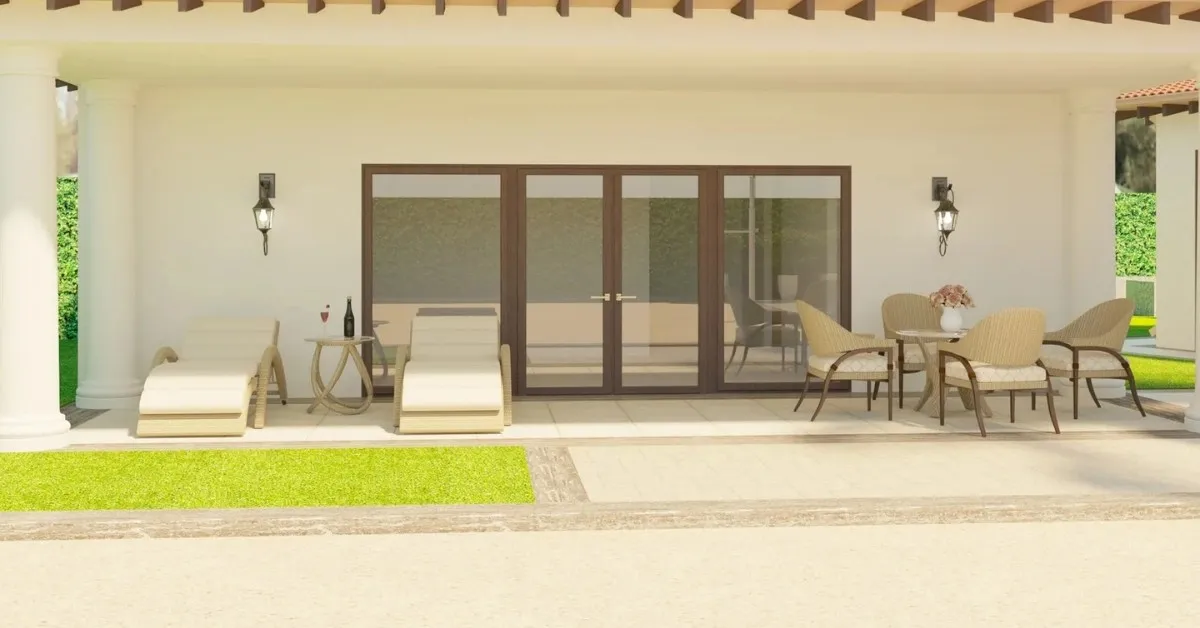
Pocket sliding doors or multi-panel bifold glass walls that disappear entirely into the wall cavity are the architectural centerpiece of open concept indoor-outdoor living in California. When fully opened, they eliminate the physical and visual barrier between interior and exterior completely. Your living room stops where the furniture ends, not where a wall begins.
3. Consistent Design Language
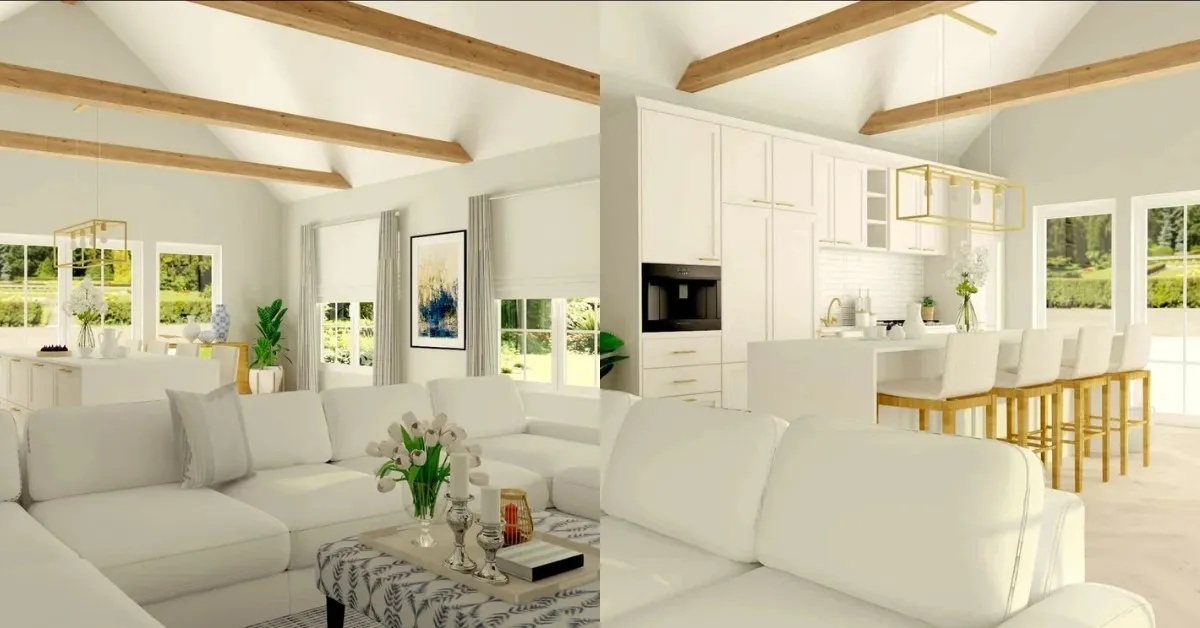
The furniture, palette, and textures you use indoors should feel like a natural continuation of what’s outside. If your interior features warm white oak, natural stone, and organic linen, your outdoor furnishings and materials should mirror that warmth and materiality. A jarring contrast like a sleek minimalist interior opening onto a generic patio set breaks the entire concept and makes both spaces feel incomplete.
4. Unified Ceiling Plane
One of the most sophisticated moves in California backyard integration design is extending the interior ceiling line outward through an architectural overhang or covered outdoor structure. When the roofline continues seamlessly beyond the glass wall, your eye reads the outdoor space as an extension of the room rather than a separate area.
Key Elements of a High-Performing Indoor-Outdoor Living Space
Getting the details right is what separates a truly integrated California home from one that simply has a nice view. These are the design elements that matter most:
Shade, Shelter, and Climate Control
Even in Southern California, unshaded afternoon sun can render a beautiful patio completely unusable for hours at a time. Pergolas with adjustable louvers, retractable shade sails, deep architectural overhangs, exterior ceiling fans, and outdoor curtains give you precision control over light and temperature. The goal is to make the outdoor zone as comfortable and livable as the interior in every season, at every hour of the day.
Outdoor Kitchen and Dining Integration
Luxury indoor-outdoor living in California almost always includes a fully equipped outdoor kitchen, not just a built-in grill, but a complete station with prep counters, undercounter refrigeration, a sink, bar seating, and weather-resistant cabinetry. When your exterior space can host the entire arc of a dinner party from cooking to plating to dessert and drinks it transcends “backyard” and becomes a genuine primary living zone.
This is especially powerful when the patio and living room connection is direct and unobstructed, allowing the host to move freely between indoor seating and the outdoor kitchen without navigating a maze of doors and hallways.
Layered Lighting for Nighttime Livability
Lighting is the element that determines whether your outdoor space gets used after 6 PM or completely abandoned. The best California outdoor living designs layer at least three types of lighting: ambient (string lights or recessed ceiling fixtures under a covered patio), task lighting (focused illumination over cooking and dining zones), and accent lighting (architectural uplighting on walls, trees, and landscape features). This layered approach creates the warm, atmospheric glow that extends your outdoor living hours well into the evening and makes the space feel intentional rather than like an afterthought.
Biophilic Design: Bringing Nature In Both Directions
The most successful California homes with indoor-outdoor integration don’t just open up to nature they actively weave it through the interior as well. Living walls flanking interior windows, built-in planters at the threshold between rooms, indoor specimen trees, and water features positioned where their sound carries into the house all strengthen the sensory dialogue between the built environment and the natural world. This is a foundational principle of biophilic design and one of the clearest markers of a premium California residential interior.
California Backyard Integration: Design Ideas That Actually Work
Here are the best indoor-outdoor living design ideas for California homes that designers and architects are executing at the highest level right now:
- The Disappearing Wall: A full-width pocket sliding glass system that retracts into the wall, creating a completely open pass-through between the great room and the terrace. No visible door frames, no threshold bump, just open space.
- The Courtyard Home: Interior rooms arranged around a central open-air courtyard, so every major room has a direct visual and physical connection to the outdoors without requiring a trip to the backyard.
- The Pool as Architecture: Infinity-edge or lap pools positioned directly adjacent to the living room, with matching stone flooring connecting the two, so the pool becomes part of the interior view rather than a separate backyard feature.
- The Covered Outdoor Room: A fully roofed outdoor living room with weatherproof sofas, a fireplace or fire pit, ceiling fans, and a television essentially a room without walls, positioned between the interior and the open yard.
- The Garden Kitchen: An herb and vegetable garden within arm’s reach of the outdoor kitchen, reinforcing the farm-to-table lifestyle that’s deeply embedded in California’s food culture and design sensibility.
Materials That Work Best for Indoor-Outdoor Continuity
Choosing materials that perform beautifully both inside and out is non-negotiable for California indoor-outdoor living design ideas that hold up over time. The most trusted options include:
- Large-format porcelain tile: Virtually impervious to moisture, UV, and temperature changes. Available in finishes that convincingly mimic wood, concrete, or stone.
- Teak and ipe hardwood: Rich, warm outdoor decking materials that age gracefully and pair beautifully with modern or organic interior aesthetics.
- Concrete and terrazzo: Exceptionally versatile, works indoors and out, and ages with character rather than degrading.
- Natural stone (limestone, travertine, bluestone): Classic, timeless, and visually grounding. Best used in honed finishes for both indoor and outdoor applications.
Why Trust Us
With over 22 years of residential design experience in Los Angeles and hundreds of completed projects across Beverly Hills, Santa Monica, Malibu, and the greater LA area, Karamia Designs has deep, hands-on expertise in creating California homes that genuinely live as beautifully as they look.
Founder Karina Rizzo is a certified professional interior designer whose work spans luxury residential transformations, spatial planning, and material curation across some of the most architecturally demanding homes in Southern California. This guide is built on real design knowledge: not generic advice: because every recommendation here comes from projects we’ve designed, planned, and delivered for real California homeowners.
Frequently Asked Questions
Q: What is the most important element for creating a seamless indoor-outdoor transition in a California home?
Consistent flooring extending from inside to outside creates visual flow and physically unifies indoor and outdoor living spaces seamlessly.
Q: How do I design an outdoor living space in Southern California that’s usable in summer heat?
Use pergolas, deep overhangs, retractable shade sails, and fans to reduce heat and maintain comfortable outdoor living all day.
Q: Can indoor-outdoor living design work for smaller Los Angeles homes and yards?
Yes, glass walls, mirrored surfaces, and continuous materials make small LA spaces feel larger and more connected outdoors.
Q: What type of flooring is best for a seamless California indoor-outdoor design?
Large-format porcelain tile is ideal for durability, moisture resistance, UV stability, and maintaining indoor-outdoor visual continuity.
Q: How much does it cost to design a luxury indoor-outdoor living space in Los Angeles?
Costs range widely, from $20,000 for glass systems to $250,000+ for full luxury outdoor living and kitchen integrations.
Conclusion: Your California Home Should Live as Well as It Looks
Indoor outdoor living in California homes is not a design feature you add at the end, it’s a design philosophy you build the entire project around. The best results come when the connection between inside and outside is considered from the very first spatial planning decision: where the glass goes, how the floors flow, how the light moves through the day, and how the space evolves from morning coffee to an evening dinner party under the stars. California’s climate is one of the most generous in the world. The only question is whether your home is designed to take full advantage of it. Ready to create an indoor-outdoor living space that transforms how you live every single day? Book Your Design Consultation with Karamia Designs Our team brings over 22 years of Los Angeles residential design expertise to every project from spatial planning and material selection to full concept development and design delivery. Let’s build something extraordinary together.