

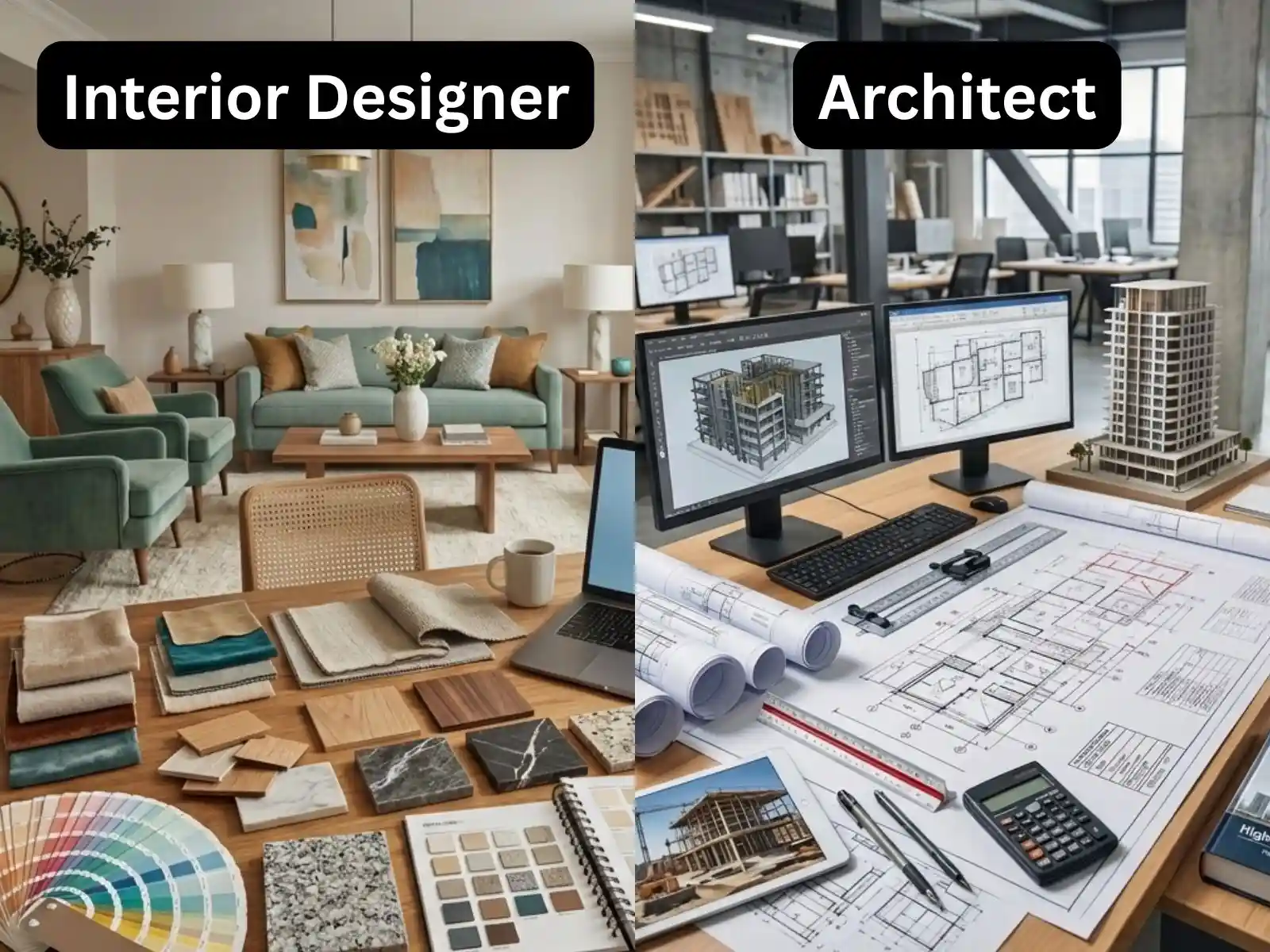
Interior Designer vs Architect: Who Do You Really Need?
When planning a beautiful and functional home, one of the most common questions homeowners ask is: Should I hire an interior designer or an architect?
The confusion is understandable. Both professionals help shape your home and improve how spaces work, but their roles are very different.
The simplest way to understand it is this: An architect focuses on the structure of a building, while an interior designer focuses on how the inside of the space looks, feels, and functions.
If your goal is to improve room flow, furniture layout, lighting, storage, or create a more functional kitchen, bathroom, closet, or living space, an interior designer is usually the right choice.
This guide clearly breaks down the differences so you can confidently decide who you actually need.
What’s the Difference Between an Interior Designer and an Architect?
An architect focuses on the building’s structure, technical planning, and code requirements. They design the physical shell of a home, structural layouts, and construction documentation.
An interior designer focuses on how the inside of the home works and feels. This includes space planning, furniture layouts, lighting, materials, finishes, cabinetry, and visual harmony.
If your home already exists and your main goal is to improve how it functions inside, an interior designer is usually the right choice.
What Does an Architect Do?
An architect is responsible for the technical and structural design of a building.
Their work includes:
- Structural planning
- Building layouts
- Technical drawings
- Exterior form design
- Load-bearing considerations
- Building code compliance
- Permit documentation
- New construction planning
- Large structural changes
When Do You Need an Architect?
You may need an architect if your project involves:
- New home construction
- Structural modifications
- Home extensions
- Major layout restructuring involving walls
- Code-heavy approvals and permits
Architects make sure the building is safe, compliant, and structurally sound.
What Does an Interior Designer Do?
An interior designer focuses on how a home functions in daily life and how every space feels and flows.
They work on:
- Space planning
- Room layout optimization
- Furniture placement
- Kitchen layout planning
- Bathroom space planning
- Closet and wardrobe design
- Material and finish selection
- Lighting design
- Cabinetry planning
- Storage optimization
- Styling and visual cohesion
- Color palette development
The goal is simple:
to create a home that feels both functional and visually balanced for everyday living.
In real projects, interior designers (like Karamia Designs) focus on improving how spaces function, flow, and feel in daily life.
Where Interior Designers Add the Most Value
Interior design makes the biggest impact in:
- Kitchens
- Bathrooms
- Closets
- Living rooms
- Bedrooms
- Home offices
- Open-plan living spaces
This is especially important when a home feels:
- slightly disorganized
- visually disconnected
- underutilized
- lacking storage
- or inefficient in layout
Interior Designer vs Architect: Key Differences
|
Factor |
Interior Designer | Architect |
|
Space planning |
Yes | Yes |
|
Furniture layout |
Yes |
No |
| Finish selection | Yes |
No |
| Lighting design | Yes |
Limited |
|
Cabinetry planning |
Yes | Limited |
|
Styling |
Yes | No |
| Structural design | No |
Yes |
| Permit drawings | No |
Yes |
| Code compliance | No |
Yes |
Simple rule:
Structure = Architect | Interior experience = Interior Designer
When Should You Hire an Interior Designer or Architect?
If your home already exists:
An interior designer helps improve:
- layout flow
- furniture placement
- lighting
- finishes
- storage
- overall usability
Kitchen Spaces
Interior design helps improve:
- workflow efficiency
- cabinet layout
- island proportions
- lighting layers
- storage usability
- material coordination
Bathroom Spaces
Interior design improves:
- vanity placement
- storage solutions
- lighting balance
- material harmony
- spatial comfort
Closet & Wardrobe Design
Interior design helps optimize:
- shelf organization
- hanging systems
- drawer layouts
- storage zoning
- usability flow
Can You Work With Both?
Yes. In many projects, both professionals collaborate.
An architect handles structural integrity, and an interior designer handles the interior experience
This is common in:
- custom homes
- large residences
- multi-room projects
Cost Perspective
Architect fees are usually related to:
- structural drawings
- technical documentation
- permits and approvals
Interior design fees are usually related to:
- space planning
- design concepts
- material selection
- furniture planning
- lighting and storage planning
Interior design often prevents costly mistakes like:
- wrong furniture scale
- poor lighting placement
- inefficient storage
- mismatched materials
- unused space
Common Mistakes Homeowners Make
These are some of the most common mistakes homeowners make when planning their home design.
- Hiring the wrong professional: If the issue is flow and usability, structural planning is not the solution.
- Ignoring scale: Furniture that is too large or too small can easily disturb the balance of a room.
- Choosing finishes without a clear concept: This often leads to visual inconsistency.
- Poor lighting planning: Lighting has a much bigger impact on comfort and usability than most people realize.
- Ignoring lifestyle needs: Good design always starts with how you actually live, not just how a space looks.
Which Professional Should You Choose?
Choose an architect if:
- You are building a new home
- You need structural changes
- You require permits and approvals
Choose an interior designer if:
- You want better flow and functionality
- You need improved storage
- You want a better furniture layout
- You want cohesive interiors
- You want a more refined living experience
Frequently Asked Questions
Can an interior designer replace an architect?
No. They serve different roles. Architects handle structure; interior designers handle interior experience and usability.
Do I need an architect for layout changes?
Only if structural walls or building systems are involved.
Is an interior designer better for kitchen design?
Yes, because kitchen success depends on workflow, storage, and usability.
Can I hire both?
Yes, and it often produces the best results for custom homes.