

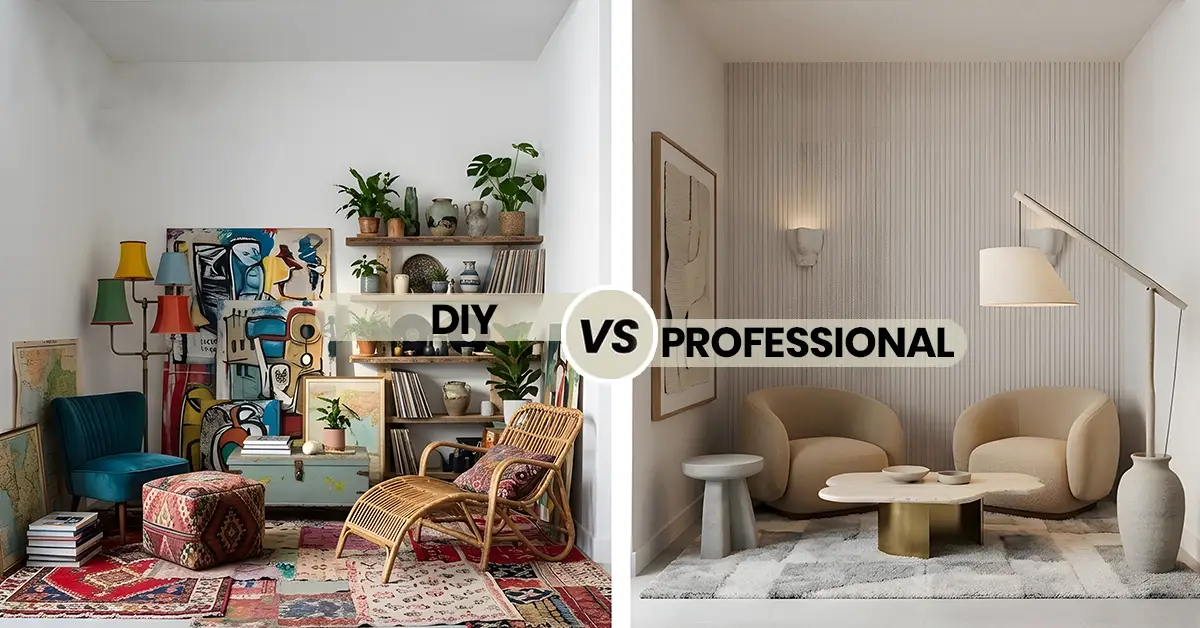
DIY vs Professional Interior Design: Which One Is Actually Worth It?
Thinking about giving your home a fresh new look? You’re probably weighing the same question thousands of homeowners wrestle with every year: should you roll up your sleeves and do it yourself, or bring in a professional interior designer to handle it all? Both paths have real merit and real trade-offs. DIY interior design gives you creative freedom and the thrill of doing something yourself. Professional interior design gives you expertise, industry resources, and results that tend to last.
For homeowners planning a more complete home transformation, working with a team that specializes in Residential Interior Design can also help avoid costly layout mistakes and create a more cohesive look throughout the space.
This article breaks down both options honestly, so you can make the decision that’s right for your home, your budget, and your lifestyle.
DIY vs Professional Interior Design: Comparison
|
Factor |
DIY Design | Professional Design |
| Upfront Cost | Lower |
Higher |
|
Risk of Mistakes |
High | Low |
|
Time Required |
Months | 6–10 Weeks |
|
Product Access |
Retail only | Trade-only vendors |
| Space Planning | Self-taught |
Expert-led |
| Cohesion Across Rooms | Inconsistent |
Fully coordinated |
| Long-Term Value | Variable |
High |
| Best For | Simple refreshes |
Full renovations |
What Is DIY Interior Design?
DIY interior design, short for Do It Yourself, means taking charge of your home’s look and feel entirely on your own. You choose the colors, pick the furniture, decide on the layout, and source everything yourself. Thanks to platforms like Pinterest, YouTube, and Instagram, more homeowners than ever feel empowered to take this route.
At its best, DIY home design is creative, personal, and cost-effective. At its worst, it leads to mismatched aesthetics, poor furniture layout planning, costly mistakes, and spaces that just don’t feel right, no matter how many throw pillows you add.
What Does a Professional Interior Designer Actually Do?
A professional interior designer does far more than make a room look pretty. They bring a structured, strategic approach to transforming your space, from initial concept through final execution.
Here’s what professional design services typically include:
- Space planning and furniture layout optimization
- Color consultation and material selection
- Lighting design to enhance mood and functionality
- Access to trade-only vendors and exclusive products
- 3D renderings and detailed design plans
- Project coordination and contractor oversight
At Karamia Designs, the process starts with a deep listening session to understand how you actually live, then moves through concept development, detailed space planning, material selection, and final design delivery. It’s a holistic approach that DIY simply cannot replicate on its own.
DIY Interior Design vs Hiring a Designer: A Side-by-Side Comparison
1. Cost: Is DIY Actually Cheaper?
This is the question everyone asks first, and the honest answer is: it depends.
DIY interior design can be cheaper upfront, especially for smaller projects or when you’re simply refreshing a room with new paint and accessories. But the cost of DIY vs hiring an interior designer becomes murkier when you factor in mistakes.
Common DIY cost pitfalls include:
- Purchasing furniture that doesn’t fit the space correctly
- Choosing materials that look different in your home than in the store
- Buying items that don’t work together and needing to replace them
- Missing structural considerations that a professional would catch immediately
Professional interior designers often have access to trade discounts on furniture, fabrics, and materials that aren’t available to the public. In many cases, those savings offset a significant portion of their fees.
If you’re in Los Angeles, Karamia Designs offers transparent pricing and a free consultation so you can understand the full scope and cost before committing to anything.
2. Time and Effort
DIY interior design takes time, a lot of it. Research, sourcing, comparing options, measuring, coordinating deliveries, returns, and redesigns. For a single room, it’s not unusual for a dedicated DIYer to spend months before achieving the final result they had in mind.
A professional designer compresses that timeline dramatically. With established vendor relationships, a practiced eye, and a structured process, what might take you six months can often be accomplished in six to ten weeks.
If your time is valuable, professionally or personally, that efficiency alone can justify the investment in professional design services.
3. Design Expertise and Space Planning
Here is where the gap between DIY and professional interior design becomes most visible.
Good design isn’t just about aesthetics; it’s about how a space functions, flows, and feels. Space planning mistakes are among the most common and costly errors in DIY interior design. Placing furniture incorrectly can make even a well-furnished room feel cramped, awkward, or incomplete.
Professional designers are trained in the principles of proportion, scale, light, and traffic flow. They understand how to make a small room feel larger, how lighting design transforms the mood of a space, and how material selection ties everything together visually and texturally.
Want to see what expert space planning looks like in practice? Browse the Karamia Designs portfolio for real examples of residential and commercial transformations across Los Angeles.
4. Access to Resources and Products
One of the most underrated benefits of hiring an interior designer is access. Professional designers work with vendors, showrooms, and manufacturers that don’t sell directly to the public. This means higher-quality products, exclusive finishes, and custom options that simply aren’t available at retail.
When you’re doing DIY interior design, you’re limited to what’s on the floor at furniture stores or available through online marketplaces. A professional expands your options significantly, often at prices that rival or beat retail once trade discounts are applied.
5. Personalization and Vision
Here’s something DIY does genuinely well: personalization. When you design your own space, you put your stamp on every choice. There’s a deep satisfaction in a room that reflects your exact taste, assembled with your own hands.
That said, professional designers are not there to impose their vision; the good ones are exceptionally skilled at understanding your lifestyle, preferences, and goals, and translating those into a cohesive space that actually feels like you. Often more so than what DIY achieves, precisely because they bring professional discipline to what can otherwise become an overwhelming collection of individual decisions.
DIY Interior Design Pros and Cons
The Pros of DIY Interior Design
- Lower upfront costs for simple projects
- Full creative control and personal expression
- Flexible timeline, you work at your own pace
- The satisfaction of building something yourself
- No coordination with external professionals required
The Cons of DIY Interior Design
- Higher risk of space planning mistakes
- Limited access to professional-grade products and vendors
- Steeper learning curve on lighting, proportion, and material selection
- Time-intensive, far more than most people anticipate
- Costly errors can exceed the price of hiring a professional
- Lack of cohesion across rooms is common without a trained eye
Professional Interior Design Advantages
So what do you actually get when you hire a professional interior designer? Here’s a summary of the most impactful advantages:
- A complete design vision from concept to execution
- Expert space planning that maximizes every square foot
- Curated material selection that creates cohesion and elevates quality
- Access to trade-only vendors, products, and pricing
- Significant time savings throughout the entire process
- Fewer costly mistakes and do-overs
- A finished space that holds its value over time
Karamia Designs brings over 22 years of professional expertise to every project. Whether it’s a kitchen interior design, a bathroom transformation, or a full residential interior design overhaul, every project is grounded in strategic planning, exceptional materials, and a deeply personal approach.
When to Hire an Interior Designer Instead of DIY
Not every project warrants professional help. But there are situations where hiring a designer isn’t just beneficial, it’s the smarter financial decision.
Consider professional interior design when:
- You’re undertaking a full home renovation or remodel
- You’ve been disappointed by previous DIY attempts
- The project involves structural changes, lighting design, or custom-built-ins
- You want to increase your home’s resale value
- You have a limited timeline and can’t afford costly delays
- You’re designing a high-visibility space like a kitchen, primary bathroom, or main living area
- Your project involves an ADU, commercial space, or multi-room coordination
Thinking This Sounds Like Your Project?
If even two or three of those scenarios apply to you, a professional consultation is worth every penny. Karamia Designs offers a free initial consultation, no pressure, no commitment, just clarity on what your space actually needs and what it would take to get there.
Book your free design consultation with Karamia Designs and get expert eyes on your project before you spend a single dollar more.
Common Mistakes in DIY Interior Design
If you’re committed to going the DIY route, knowing where others go wrong can save you significant time and money.
Ignoring Scale and Proportion
Oversized sofas in small rooms, tiny rugs in large spaces, artwork hung too high, and scale errors are the hallmark of inexperienced design. Always measure carefully and use painter’s tape on the floor to visualize furniture footprints before purchasing.
Underestimating Lighting
Lighting design is one of the most powerful and most overlooked elements of interior design. Relying solely on overhead fixtures flattens a room. Layering ambient, task, and accent lighting transforms a space completely.
Buying Without a Plan
Falling in love with individual pieces without a holistic home design planning framework is how most rooms end up feeling disjointed. Every purchase should serve the overall vision, not just look good in isolation.
Neglecting Traffic Flow
A beautifully furnished room that’s difficult to navigate fails at its fundamental purpose. Space planning isn’t just about aesthetics; it’s about how people move through and use a room.
Skipping Professional Help for Complex Projects
There’s no shame in knowing when a project exceeds your expertise. Kitchen remodels, bathroom renovations, and ADU design involve a level of technical complexity, plumbing, electrical, and structural elements, where professional guidance isn’t optional; it’s essential.
Interior Design on a Budget vs Hiring a Designer: Finding the Middle Ground
The good news is that DIY and professional design don’t have to be an either/or decision. Many homeowners find success with a hybrid approach:
- Hire a designer for the planning phase only, then execute yourself
- Bring in a professional for one key room and DIY the rest
- Use an e-design package for remote design direction at a lower cost
- Consult a designer for material selection and furniture layout, then shop independently
Karamia Designs offers flexible interior design services designed to meet homeowners at different budget levels and project scopes. A consultation alone can provide enough direction to dramatically improve your DIY results.
Can I Design My Home Without a Designer? The Honest Answer
Yes, and many people do, with varying degrees of success.
The difference between a DIY home that looks polished and one that feels incomplete usually comes down to three things: a clear design concept from the beginning, disciplined adherence to that concept throughout, and a solid understanding of the principles of space, light, and proportion.
If you have a strong visual sense, time to research thoroughly, and patience for the trial and error that DIY inevitably involves, it’s absolutely possible to create a beautiful home without a designer. But if you’re looking for a space that feels cohesive, elevated, and reflective of your best life, professional interior design expertise is hard to replicate on your own.
How to Choose Between DIY and Hiring a Designer
Use these questions to guide your decision:
- What is the scale and complexity of my project?
- How much time do I realistically have to dedicate to this?
- Have I attempted DIY design before and been happy with the results?
- Is this a space I want to love for years, or just a temporary refresh?
- What is my true budget, including potential do-over costs?
- How important is maximizing the value of my home?
If your answers skew toward a complex, high-stakes, long-term project, professional interior design is almost always the smarter investment.
The Difference Between DIY and Professional Interior Design
At its core, the difference between DIY and professional interior design comes down to depth, cohesion, and execution.
DIY gives you creative ownership and potential cost savings on smaller projects. Professional interior design gives you strategic expertise, industry access, time efficiency, and results that reflect your full vision, not just individual pieces of it.
Neither is right for every person or every project. The key is being honest about what your project actually needs and what you’re equipped to deliver.
Frequently Asked Questions: DIY vs Professional Interior Design
Is it cheaper to DIY interior design or hire a professional?
DIY is cheaper upfront for small projects, but professional designers often save money long-term through trade pricing, fewer costly mistakes, and better material decisions.
What are the biggest mistakes in DIY interior design?
The most common mistakes are poor space planning, ignoring lighting layers, buying furniture without a cohesive concept, and misjudging scale and proportion.
When should I hire an interior designer instead of doing it myself?
Hire a professional when your project involves multiple rooms, structural changes, high-end finishes, or when you want to increase your home’s resale value.
Can I design my home without a designer?
Yes, if you have a clear design concept, a strong visual sense, and time for research. A hybrid approach (professional planning, DIY execution) works well for many homeowners.
What is the difference between DIY and professional interior design?
DIY gives you control but limits access to trade resources. Professional design brings strategic planning, vendor access, and a cohesive vision that’s hard to achieve alone.
How much does it cost to hire an interior designer in Los Angeles?
Costs vary by scope and square footage. Karamia Designs offers transparent pricing with a free consultation so you know exactly what to expect before committing.
Ready to Work with a Professional Interior Designer in Los Angeles?
If you’re leaning toward professional help or just want expert guidance before making your next design move, Karamia Designs is here for you. Founded by Karina Rizzo, a certified interior designer with 22+ years of experience, Karamia Designs has transformed over 500 homes across Los Angeles, Beverly Hills, Santa Monica, Malibu, and beyond.
Whether you need kitchen design, bathroom design, closet design, ADU design, or a full residential interior design transformation, Karamia Designs brings the expertise, the resources, and the deeply personal approach your home deserves.
Book your free design consultation today, and take the first step toward a home you truly love.