
What Are the Latest Trends in Bathroom Vanities?
When I first started, a bathroom vanity was almost an afterthought. Clients picked white or off-white, chose a basic shaker door, and called it done. Everyone in Brentwood had the same look. Everyone in Pacific Palisades had the same look. It was like we were all shopping from the same one-page catalog. I used to joke that I could walk into any spec home in West LA and predict the vanity before I opened the bathroom door.
That is completely over now. And I couldn’t be happier about it.
Here is what I am actually seeing on projects right now, not just in design magazines, but in the real homes of real clients across Beverly Hills, Calabasas, Bel Air, and Santa Monica. As an interior designer in Los Angeles, I find that homeowners are now demanding.
Choosing the Right Bathroom Vanity Type
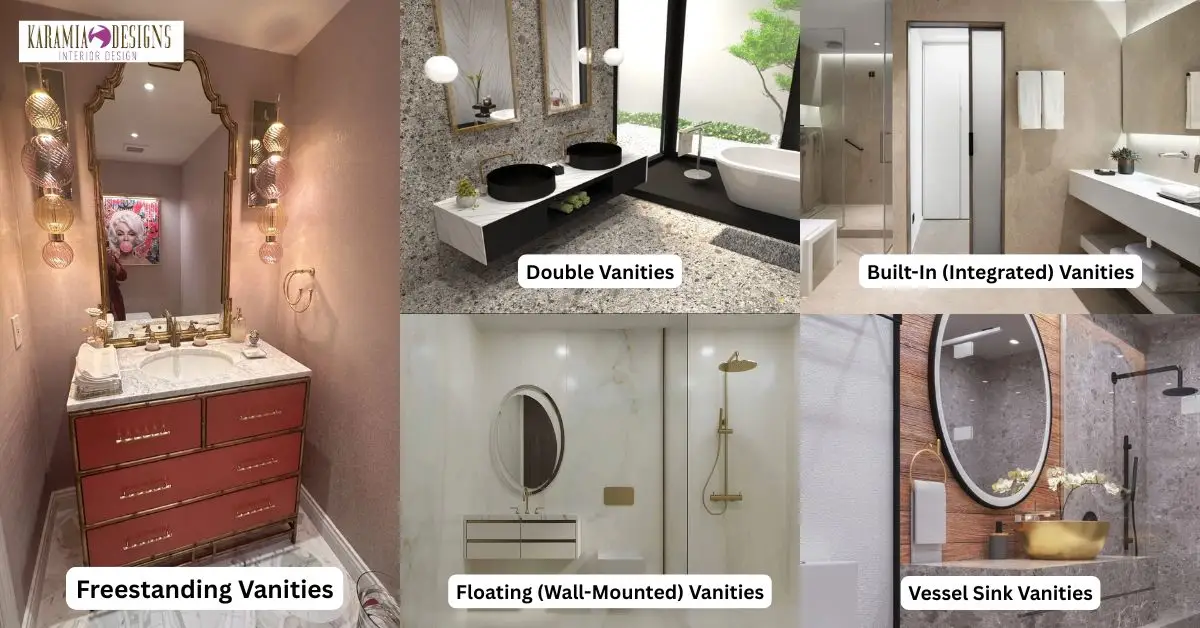
Before we even get into finishes and trends, I want to address something that trips up almost every client who comes to me mid-renovation: they have already fallen in love with a look without understanding which type of vanity actually suits their space. I have seen beautiful rooms undermined entirely by this one decision. So let me break down what I work with every day.
- Floating (Wall-Mounted) Vanities
These are my most-specced type right now, and for good reason. The cabinet mounts directly to the wall with no floor contact, which creates that open, airy sightline that makes even a smaller bathroom in Santa Monica feel twice its size. The floor tile reads continuously underneath, cleaning is effortless, and the look reads unmistakably modern. The one thing clients need to understand: the wall framing has to be solid and properly blocked. I always confirm this before speccing a float; it is a structural conversation, not just a style one.
- Freestanding Vanities
We are having a genuine moment right now, particularly in larger primary bathrooms in Bel Air and Calabasas, where there’s room to let a piece breathe. These sit on the floor on legs or a full base and feel the most furniture-like of all the types, which is exactly why they work so well in rooms where the bathroom is meant to feel like an extension of the bedroom. A client I worked with in Beverly Hills last year had a freestanding walnut vanity custom-built to match her bedroom’s credenza. The continuity between the two spaces was breathtaking.
- Built-In (Integrated) Vanities
These are what I typically specify when a client wants maximum storage or has a layout with alcoves or recesses that can be used structurally. The vanity is essentially built into the wall or cabinetry run, often floor-to-ceiling on either side. I did a Pacific Palisades project where we flanked the double sink with floor-to-ceiling integrated cabinetry in a warm greige lacquer; the whole wall became the vanity, and the storage capacity was extraordinary. These require more planning upfront but deliver the most cohesive, architectural result.
- Double Vanities
They deserve their own mention because the conversation I have most often in shared primary bathrooms is whether to go double or stay single. My answer is almost always double, but only if the room can genuinely support the footprint. Cramming a 72-inch double vanity into a bathroom that needs a 48-inch single just to breathe is a decision people regret. I had a client in Brentwood who insisted on the double. We mock-taped the footprint on her floor. She immediately agreed to go single with a wider countertop and smarter storage. Best call she made.
- Vessel Sink Vanities
Sit lower than standard height, typically 28 to 32 inches, because the basin sits on top of the counter rather than dropping in. They create a dramatic, sculptural look, and I love them in powder rooms or secondary bathrooms where they can be a statement without the ergonomic demands of a primary bath. I am currently working on a Santa Monica project where a hand-formed clay vessel sink on a slim floating oak base is the entire personality of a small guest bathroom. Nothing else in the room needs to compete.
Understanding which type fits your space, your plumbing layout, and your lifestyle is the foundation on which everything else gets built. Get this wrong, and no finish or hardware choice will fully save it.
Next-Gen Floating Bathroom Vanities
I have been speccing floating vanities for at least a decade. But the old version was always very cold: flat slab fronts, stark white, floating in a sea of cool grey tile. It worked. It photographed well. But it never felt truly lived in.
What I’m doing now, and what my clients are absolutely loving, is pairing the wall-mounted silhouette with warmer materials. A white oak floating vanity in a Bel Air primary suite we finished earlier this year transformed the space. The client had originally wanted the usual white lacquer. I pushed back. I showed her a mock-up with a honey-toned oak grain, warm ambient toe-kick lighting underneath, and travertine walls behind it. She called me three days after moving in to say it was the best decision of the entire project.
The floating format still does everything it always did; it makes the bathroom feel larger, the floor reads as one continuous plane, and cleaning is so much easier. But now it also feels like furniture, not a cabinet. That distinction matters more than people realize.
Modern Bathroom Vanity Color Trends
I want to be direct about something: cool grey cabinetry and stark white shaker fronts are done. I am still getting calls from contractors and spec builders who want to go that route, and I have to have a very honest conversation with them every single time.
I had a client in Pacific Palisades last year who had already purchased a light grey vanity set before coming to me. She brought me in to “just do the finishing touches.” Within our first consultation, I gently redirected the entire vanity choice. She was hesitant. Then we installed a warm, clay-toned double vanity with brushed brass hardware and a honed marble top instead, and that bathroom now stops every single guest who walks into it.
What I am speccing instead: sage greens, deep navies, warm taupes, and earthy terracottas for clients who want personality. For clients who want timeless, I go straight to white oak or walnut with a natural matte finish. These are not trendy choices; they are materials that age beautifully and never feel stale.
Styling a Textured or Fluted Vanity
The fluted vanity front has been one of the most requested details in my studio this past year. I had three separate clients in Santa Monica ask for it within the same month. And it makes sense, the ribbed texture adds depth, shadow play, and that high-end furniture quality that everyone is chasing.
But here is where I see a lot of designers go wrong: they put a fluted vanity front against a fluted tile, next to a fluted mirror, with a ribbed light fixture. The result is visual chaos. It feels like the bathroom got dressed in the same outfit from head to toe.
My rule is simple: if the vanity has texture, the walls and floors need to be quiet. Let one element do the talking. In a Calabasas master bath I finished recently, we used a fluted white oak double vanity and paired it with smooth, large-format limestone floor tiles and a seamless plaster wall behind the mirror. The fluting became the star. Everything else supported it. That is the edit that makes a bathroom feel genuinely designed rather than assembled from trend boards.
Matching Luxury Bathroom Vanity Hardware
This one is still surprising to some clients when I bring it up. For a long time, the design rule was to commit to one metal finish throughout the bathroom and stick to it religiously. Chrome everything. Or matte black everything. Or brushed nickel everything.
That rule feels very dated now, and honestly, it always read a little builder-grade, even when the individual pieces were beautiful. What feels elevated today is the intentional mix: brushed brass on the faucet and cabinet pulls, matte black in the shower fixtures, a soft chrome on the mirror frame. When it’s done with purpose, it feels collected and curated. When it’s done randomly, it just looks like decisions made on five different shopping trips.
I always tell my clients: pick two metals, decide which one leads and which one accents, and be consistent with that logic throughout the space. It is the difference between a bathroom that feels designed and one that feels accidental.
Smart Bathroom Vanity Features
I have had clients in Beverly Hills ask for smart bathroom features for years, built-in charging, backlit anti-fog mirrors, and LED lighting that activates when you open a drawer. A few years ago, those felt like luxury add-ons.
Now I’m seeing them requested on mid-range projects in West LA too. The reason is practical: people do not want cords on their countertops. They do not want to fumble for outlets behind the vanity cabinet. A bathroom that functions as smoothly as it photographs is the actual standard my clients want to hold things to.
When I’m designing a custom vanity for a client, building in a USB-C charging drawer and specifying a backlit mirror with a dimmable touch strip is now as standard as choosing the countertop material. It doesn’t have to be complicated; it just has to be thought through from the beginning.
Investing in a Custom Bathroom Vanity
One of the most meaningful shifts I’ve seen is that custom vanities are becoming genuinely accessible. Not cheap, but within reach for a broader range of renovation budgets than even five years ago.
I recently did a Brentwood bathroom where the homeowner had a tight footprint, and every stock vanity she found online was either six inches too short or twelve inches too long. We went custom. The total cost was only modestly higher than a high-end stock piece, and the result fit the space perfectly, maximized every inch of storage, and used a finish she couldn’t find anywhere ready-made.
If your bathroom has any awkward dimensions, non-standard plumbing placement, or a layout that feels like it’s fighting you, that is exactly when a custom vanity stops being an indulgence and starts being the practical choice.
The Rise of Monolithic Stone Vanities
The direction I am most excited about heading into the rest of 2026 is the move toward monolithic stone vanities, travertine or limestone counters that flow continuously into the side panels and even the backsplash, with veining aligned to read as one unbroken slab. I’ve been incorporating this on high-end projects in Bel Air, and the response has been extraordinary. It is architecture, not just cabinetry.
Los Angeles clients have always been ahead of national trends when it comes to bathrooms. The demand for spaces that feel like a luxury hotel or private wellness retreat is real here in a way that doesn’t exist everywhere. That standard keeps pushing my work, and my clients, toward something more considered, more personal, and more lasting.
If your bathroom vanity is due for an update, or if you’re starting a remodel from scratch in Beverly Hills, Brentwood, Pacific Palisades, or anywhere across Greater LA, I would love to talk through what is possible in your specific space.
Frequently Asked Questions
What is the most popular bathroom vanity style in Los Angeles right now?
Floating vanities with warm wood finishes like white oak or walnut are the most requested style I see. They feel modern, spacious, and genuinely luxurious.
Are fluted vanities still in style for 2026?
Yes, but keep them paired with simple, quiet surroundings, let the texture be the focal point, not compete with everything else in the room.
What vanity colors are replacing grey and white?
Sage green, warm taupe, deep navy, and terracotta are leading the shift; they feel grounded and spa-like rather than clinical.
Should I mix metal finishes in my bathroom?
Absolutely intentionally mixing two finishes, like brushed brass and matte black, reads as curated and elevated versus the overly matched look that now feels builder-grade.
Is a custom vanity worth the cost?
For non-standard spaces or specific storage needs, yes, custom often adds only marginally to the budget while solving every layout problem a stock vanity can’t.
What smart features are worth including in a new vanity?
Built-in USB-C charging, LED touch-dimmer mirrors, and drawer-activated lighting. These small upgrades genuinely improve daily use and keep your countertop clear.
Designing Your Space
At the end of the day, a bathroom renovation is an investment in your daily routine. Eliminating the guesswork of complex spatial dimensions, technical plumbing layouts, and the limitations of out-of-the-box cabinetry is simply part of creating a home that feels considered.
If your bathroom vanity is due for an update, or if you are starting a remodel from scratch in Beverly Hills, Brentwood, Pacific Palisades, or anywhere across Greater LA, I would love to talk through what is possible in your specific space.
You can reach out to connect with the Karamia Designs team directly to discuss your project.