

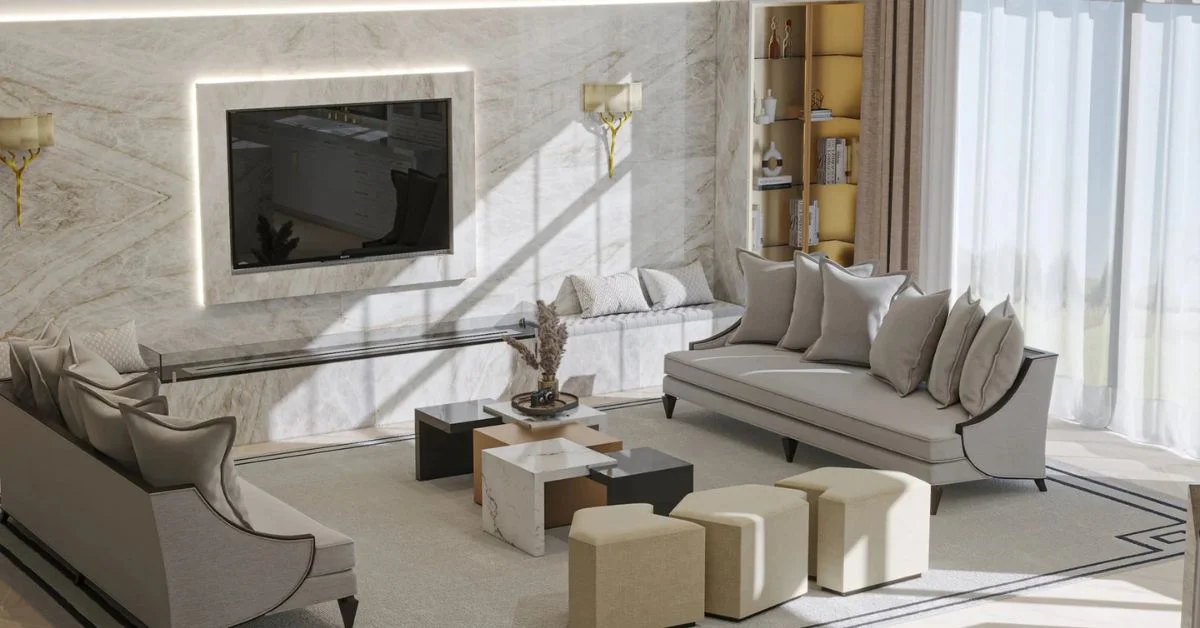
How to Design a Stylish Living Room for Entertaining
The best living room design for entertaining balances comfort, conversation, circulation, and style. A well-planned entertaining space should give guests comfortable places to sit, make it easy to move between areas, provide flexible lighting, and feel visually connected to the rest of the home. The key is designing around how people actually gather, not simply where the television or largest piece of furniture fits.
At Karamia Designs, our residential interior design approach considers the architecture, proportions, lifestyle, entertaining habits, materials, lighting, and relationship between the living room and surrounding spaces. The result is a space that feels refined and intentional while remaining comfortable enough for everyday living and effortless hosting
What Makes a Living Room Ideal for Entertaining?
An ideal entertaining living room brings together five essential elements: conversation, circulation, comfort, atmosphere, and flexibility.
- Conversation: Seating should allow guests to comfortably see and interact with one another.
- Circulation: People should be able to move naturally between the living room, kitchen, dining area, entry, and outdoor spaces.
- Comfort: Seating should accommodate everyday use as well as additional guests without making the room feel overcrowded.
- Atmosphere: Layered lighting, materials, textures, and decorative details should create an inviting mood.
- Flexibility: Furniture and accessories should be adaptable enough to accommodate different types of gatherings.
The most successful spaces do not simply add more furniture to accommodate guests. They use thoughtful proportions and purposeful arrangements so the room feels spacious when empty and welcoming when occupied.
How to Arrange a Living Room for Entertaining
Before choosing individual furniture pieces, establish the overall arrangement. The right living room layout for entertaining should make conversation easy while preserving comfortable pathways through the space. These living room layout ideas can help create a balanced arrangement that feels inviting, functional, and easy to navigate.
A practical approach is to:
- Identify the room’s focal point: This could be a fireplace, architectural feature, artwork, or exterior view.
- Establish the main seating group: Position the primary sofa or sectional where it supports the room’s architecture.
- Orient seating toward one another: Avoid directing every seat toward a television when social interaction is the priority.
- Add a central surface: A coffee table or combination of occasional tables gives guests convenient access to drinks and personal items.
- Protect circulation paths: Keep the primary routes through the room open rather than filling every available area with furniture.
- Introduce flexible seating: Accent chairs, ottomans, or stools can accommodate additional guests when necessary.
- Complete the atmosphere with layered lighting: Combine architectural and decorative lighting to create different moods.
This approach works across a range of room sizes because the principle stays the same: create a cohesive gathering zone without sacrificing movement.
1. Start With a Conversation-Friendly Living Room Layout
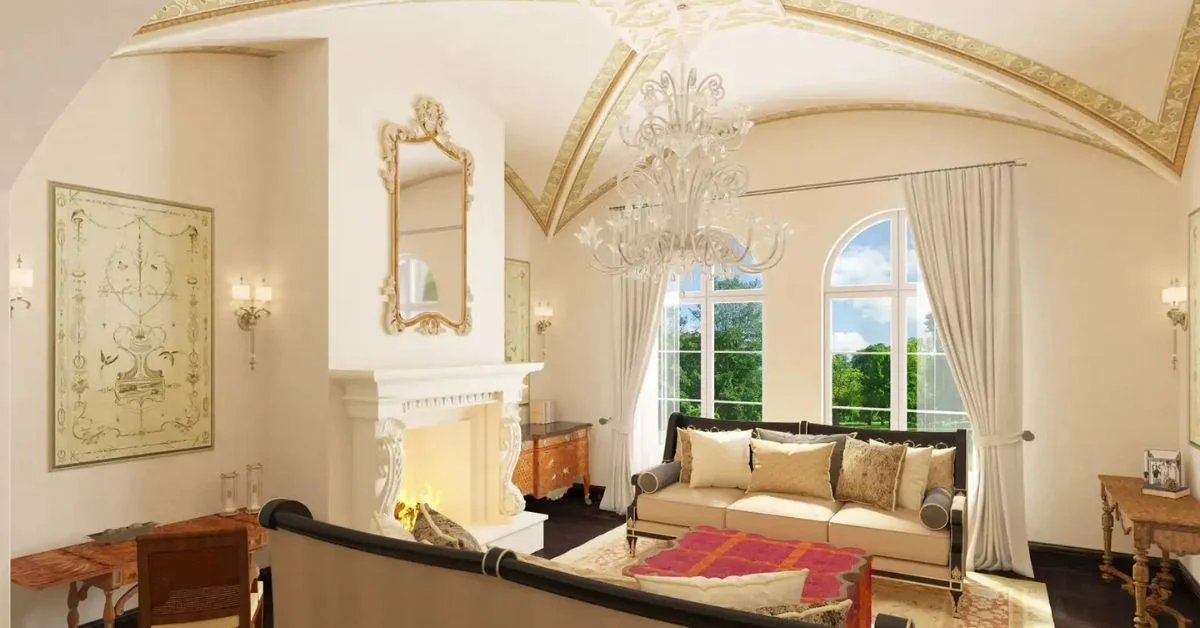
One of the most important living room design principles for entertaining is to arrange furniture around people rather than around a television.
For example, two sofas facing each other can create an inherently social arrangement. A sofa paired with two accent chairs offers another flexible configuration, while a sectional can define a larger, more casual gathering area.
Which layout works best?
- Two sofas facing each other work particularly well when conversation is the primary purpose and the architecture allows for a balanced arrangement.
- A sofa with accent chairs is useful when you want flexibility. Chairs can be repositioned for larger gatherings and can introduce different materials, shapes, or colors.
- A sectional can be ideal for spacious, informal rooms where guests tend to gather together in one area.
- Multiple seating zones are effective in larger living rooms. Instead of trying to make every seat part of one enormous arrangement, create a primary conversation area and a smaller secondary zone.
The most important consideration is not the furniture style but the relationship between the pieces. Guests should feel connected rather than separated by excessive distance.
2. Create Comfortable, Flexible Seating for Guests
Seating is the foundation of an entertaining space. A living room may look sophisticated, but if guests do not have comfortable places to sit, the design will not perform well.
A well-balanced arrangement can include:
- A generously sized sofa
- A sectional
- Accent or lounge chairs
- Ottomans
- Occasional stools
- A bench where appropriate
Rather than selecting every piece from one furniture collection, consider combining complementary shapes and materials. This creates a more collected and sophisticated appearance.
Choose seating according to how you entertain
- If your gatherings are relaxed and informal, a deep sectional can encourage guests to settle in and socialize.
- If your entertaining style is more conversational, two sofas or a sofa paired with lounge chairs may create a stronger arrangement.
- If you frequently host different numbers of guests, movable chairs and ottomans provide flexibility without requiring the entire room to be rearranged.
- Comfort should also influence upholstery choices. A beautiful fabric is only successful when it works with the way the room is actually used.
3. Choose a Coffee Table That Works for Entertaining
A coffee table is both a visual anchor and a practical part of the seating arrangement.
The right shape depends on the furniture surrounding it. A rectangular table can complement a long sofa, while a round or oval design can soften a room with angular furniture and make movement around the seating group feel more fluid.
For entertaining, the coffee table should provide enough usable surface for drinks, books, decorative objects, and other essentials without overwhelming the seating area.
Material can also contribute to the room’s character. Natural stone, wood, glass, metal, and mixed-material designs each create a different aesthetic.
The important consideration is scale. A coffee table that is too small can make a large seating arrangement feel disconnected, while an oversized table can restrict movement.
In a sophisticated interior, the coffee table can become an opportunity to introduce a distinctive material or sculptural form while still serving an everyday purpose.
4. Layer Living Room Lighting for Different Occasions
Lighting has a major influence on how an entertaining space feels.
Instead of relying on one central ceiling fixture, combine several layers:
- Ambient lighting for overall illumination.
- Task lighting for reading and specific activities.
- Accent lighting for artwork, shelving, architecture, or decorative features.
- Decorative lighting for visual impact.
A sophisticated living room may incorporate recessed lighting, chandeliers, pendants, sconces, table lamps, floor lamps, and integrated accent lighting.
Design lighting around the way you entertain
The lighting required for a daytime gathering is different from the atmosphere desired for an evening dinner party or cocktail gathering.
Dimmers allow the room to transition throughout the day. Softer accent lighting can create intimacy in the evening, while brighter ambient illumination can support daytime activities.
Decorative fixtures also offer an opportunity to establish a focal point. A sculptural chandelier or carefully positioned sconces can function as architectural jewelry while contributing to the overall lighting scheme.
5. Build a Stylish Focal Point
Every successful living room benefits from a clear visual anchor.
Depending on the architecture, this might be:
- A fireplace
- A dramatic piece of artwork
- A statement chandelier
- Custom millwork
- Built-in shelving
- A feature wall
- Large windows with a significant view
- A sculptural piece of furniture
The key is to work with the architecture rather than against it.
If the room already has a dramatic fireplace, for example, the furniture arrangement can reinforce it rather than introducing several competing focal points.
In a room with expansive windows, orienting the seating toward the view can make the architecture itself part of the design.
A refined interior generally benefits from hierarchy: one or two elements should command attention while supporting details remain complementary.
6. Use a Cohesive Mix of Materials, Textures, and Color
Stylish living rooms rarely depend on one material or perfectly matching furniture.
Instead, visual depth comes from combining different textures, tones, and finishes.
Consider layering:
- Natural wood
- Stone
- Metal
- Glass
- Upholstered fabrics
- Textured rugs
- Decorative plaster
- Artwork
- Sculptural accessories
A neutral palette can feel exceptionally sophisticated when it incorporates variation in texture and tone. Stronger colors can be introduced selectively through artwork, accent furniture, textiles, or accessories.
Avoid making everything match
One of the easiest ways to make a living room feel predictable is to select every piece from the same collection.
A more sophisticated approach is to create relationships between materials rather than exact matches. Warm wood might be paired with natural stone, soft upholstery, brushed metal, and textured textiles.
The materials do not have to be identical. They simply need to contribute to a coherent visual story.
7. Make Storage Part of the Design
Entertaining becomes easier when everyday clutter can be put away quickly.
Instead of treating storage as an afterthought, integrate it into the architecture and furniture plan.
Custom built-ins can provide discreet storage for:
- Books
- Games
- Media equipment
- Barware
- Serving pieces
- Decorative accessories
- Everyday items
Closed cabinetry can conceal objects when they are not being used, while open shelving can display artwork, books, and curated collections.
For an elegant interior, storage should feel like part of the room rather than an assortment of unrelated furniture.
This is especially important in open-concept homes where the living room remains visually connected to the kitchen and dining area.
8. Connect the Living Room to Dining and Outdoor Spaces
A living room designed for entertaining should feel connected to the rest of the home.
When the living room, kitchen, dining area, and outdoor spaces relate visually and functionally, guests can move naturally between areas without interrupting the flow of a gathering.
Several design elements can strengthen these connections:
- Consistent or complementary flooring
- Coordinated material palettes.
- Large windows.
- Sliding or folding doors.
- Consistent architectural details.
- Furniture oriented toward views.
- Clear pathways between gathering areas designed according to professional residential circulation guidelines.
In homes with outdoor entertaining areas, the exterior can function as an extension of the living room. Positioning furniture to acknowledge a terrace, garden, or view can make the entire property feel more connected.
9. Design for Both Small Gatherings and Larger Groups
The most useful entertaining spaces are adaptable.
Your living room may need to accommodate a quiet evening for two one day and a larger gathering the next. Flexible pieces can help the room transition without compromising its everyday appearance.
Consider incorporating:
- Movable accent chairs
- Ottomans
- Nesting tables
- Lightweight stools
- Flexible occasional tables
- Modular seating
The goal is not to make the room look temporary. Everyday furniture should remain intentional and visually cohesive, while smaller pieces provide additional flexibility when guests arrive.
In larger rooms, consider creating distinct zones instead of placing one oversized seating arrangement in the center. A primary conversation area can serve most gatherings, while a secondary seating zone provides additional capacity.
10. Add Personal Details That Make the Space Feel Inviting
A beautiful entertaining room should still feel personal. Artwork, books, collected objects, family pieces, travel finds, textiles, and greenery can give the interior character and create conversation points.
The strongest rooms often contain details that could not have been selected for just any house because they reflect the people who live there.
The key is curation rather than accumulation. Instead of filling every surface, choose fewer pieces with stronger visual or emotional significance. A sculptural object on a console, a carefully selected artwork, or a collection of books can often create more impact than numerous decorative accessories.
This balance between refinement and personality is what helps an entertaining space feel inviting rather than staged.
Common Living Room Design Mistakes to Avoid
Even strong living room decorating ideas can fail when the fundamentals are overlooked.
- Pushing all furniture against the walls: This can create an unnecessarily empty center while making conversation feel disconnected. Furniture often works better when grouped intentionally within the room.
- Prioritizing appearance over comfort: A sophisticated sofa or chair still needs to be comfortable enough for extended conversations and everyday use.
- Using only one lighting source: A single overhead fixture rarely provides the flexibility required for both everyday living and entertaining.
- Choosing furniture without considering scale: Oversized furniture can make a room feel cramped, while undersized pieces can leave a large room feeling unfinished.
- Ignoring circulation: Guests should not have to navigate around furniture simply to move from the living room to another part of the home.
- Overdecorating: Too many objects can compete with the architecture, furniture, and artwork. Thoughtful negative space is an important part of sophisticated interior design.
- Designing only for the television: If entertaining is a major priority, the television should not automatically determine every seating position. A successful room can accommodate media viewing while still supporting face-to-face interaction.
How to Create a Luxury Living Room for Entertaining
A luxury living room is not defined simply by expensive furniture. True sophistication comes from proportion, craftsmanship, customization, material quality, and attention to detail.
The difference is often found in the decisions that are less obvious at first glance.
Custom millwork can make storage feel architectural. Tailored upholstery can provide the right proportions and visual balance. Natural stone can introduce depth and variation. Architectural lighting can emphasize important features without becoming visually dominant.
Furniture scale is equally important. A beautifully made sofa can still feel wrong if its proportions do not relate to the room.
Material transitions should also feel intentional. The relationship between flooring, wall finishes, cabinetry, upholstery, metals, and decorative elements contributes to the overall sense of cohesion.
What makes a luxury entertaining space feel effortless?
The answer is usually restraint and customization. Rather than filling a room with expensive objects, focus on a few elements that have meaningful visual impact:
- A custom-built architectural feature
- A distinctive natural stone
- Tailored furniture
- A statement lighting fixture
- Carefully selected artwork
- Refined hardware and finishes
- Integrated technology
- Thoughtfully planned storage
The goal is to create an environment where every element has a reason to be there.
We develop custom living room interiors around the architecture of the home, the client’s lifestyle, and the way they use the space. We consider proportions, circulation, furniture scale, materials, lighting, functionality, and personal aesthetic together rather than treating each decision independently.
That approach allows an entertaining space to feel polished enough for special occasions while remaining comfortable and practical for everyday living.
Frequently Asked Questions About Living Room Design Ideas
What is the best living room layout for entertaining?
A conversation-oriented layout is generally one of the most effective approaches because it positions seating toward one another while maintaining clear circulation. The ideal arrangement ultimately depends on the room’s size, architecture, focal points, and how the homeowners entertain.
How can I make my living room better for entertaining?
Start with comfortable seating and a layout that encourages conversation. Then add accessible surfaces, layered lighting, practical storage, flexible seating, and clear pathways to adjacent areas such as the kitchen, dining room, or outdoor space.
What furniture is best for an entertaining living room?
A comfortable sofa or sectional combined with accent chairs, a well-scaled coffee table, and occasional tables creates a flexible foundation. Movable chairs and ottomans can provide additional seating when larger groups arrive.
How do you arrange a small living room for entertaining?
Prioritize circulation and appropriately scaled furniture. Choose pieces that perform more than one function, avoid overcrowding the seating area, and consider movable accent chairs or ottomans that can be repositioned when guests arrive.
Is a sectional good for entertaining?
A sectional can work very well for casual entertaining because it provides generous seating and can visually define a gathering area. However, two sofas or a sofa with accent chairs may be better when face-to-face conversation is the primary goal.
How important is lighting in an entertaining living room?
Lighting is essential because it influences both function and atmosphere. Combining ambient, task, accent, and decorative lighting allows the same room to transition from daytime activities to a more intimate evening setting.
How can a living room feel luxurious without looking overdone?
Focus on quality, proportion, customization, and restraint. A cohesive material palette, tailored furniture, architectural lighting, custom details, and carefully selected artwork can create a sophisticated interior without excessive decoration.
Creating a Living Room Designed for Entertaining
The best living room design begins with the way the space needs to function.
When entertaining is a priority, the room should make conversation effortless, provide comfortable seating, preserve natural circulation, offer flexible lighting, and connect naturally with the rest of the home. The most successful entertaining spaces do not sacrifice functionality for beauty. Instead, thoughtful planning allows the two to work together.
From the scale of the sofa and coffee table to the placement of accent chairs, lighting layers, storage, materials, and artwork, every decision contributes to the experience of the room.
With the right approach, a living room can transition effortlessly from an everyday family space into an inviting setting for intimate gatherings, celebrations, and larger occasions, while still feeling distinctly personal to the people who call it home.
If you’re considering a living room redesign, Karamia Designs can help you create a space that reflects your home, lifestyle, and entertaining needs.