

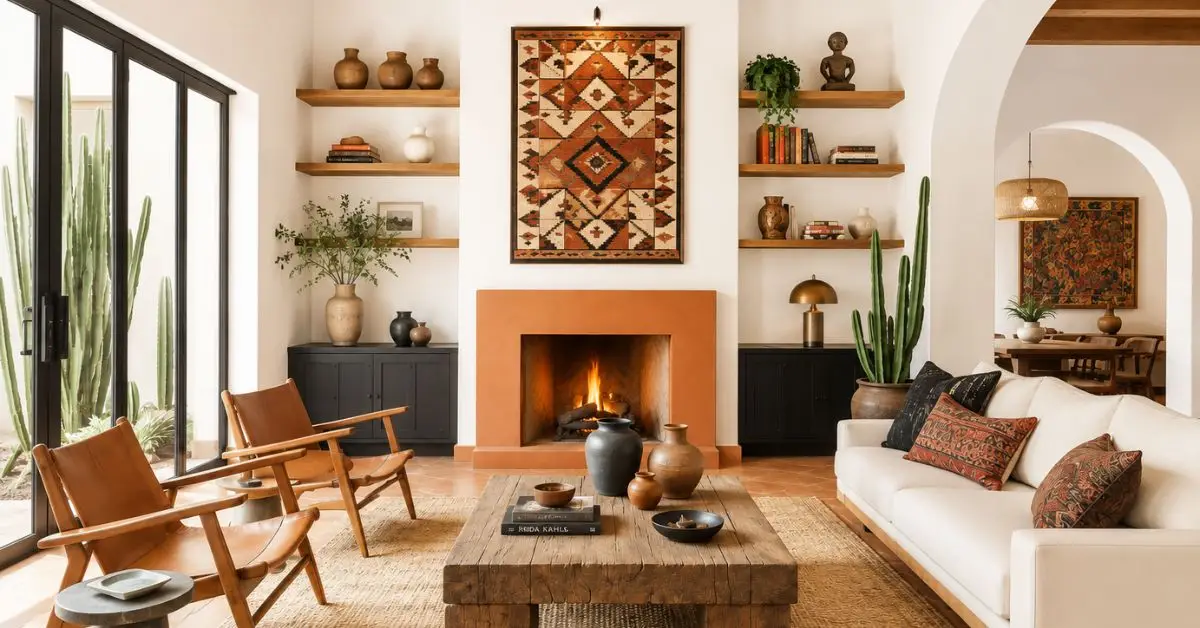
Modern Mexican Interior Design: The Definitive Guide to Getting the Look
In 2026, modern Mexican interior design has matured into one of the most compelling aesthetics in luxury residential spaces. It is not the stereotype of saturated fiesta colors, piñatas, or tourist-market overload. Instead, it represents a refined dialogue between restraint and soul, a Warm Minimalism that honors Mexico’s layered cultural heritage while embracing contemporary architectural clarity.
Where sterile all-white modernism often feels cold and disconnected, modern Mexican design invites warmth through natural materials, subtle tonal shifts, and the quiet presence of handcrafted elements. It creates homes that feel both grounded and elevated, spaces where light dances across textured surfaces and cultural memory whispers without shouting.
At Karamia Designs, we have spent years curating this aesthetic for discerning clients across the American Southwest, California, and beyond. This guide distills the principles, practical applications, and nuanced details that define authentic modern Mexican interiors today.
What Defines Modern Mexican Interior Design?
Modern Mexican design rests on a deliberate tension: the precision of contemporary architecture paired with the imperfection of artisanal craft. Clean planes and minimal silhouettes provide the structure, while hand-finished materials and time-honored techniques add emotional depth.
This is not fusion for its own sake. It is a natural evolution. Mexican architecture has always balanced formality (think colonial courtyards and grand portales) with organic responsiveness to climate and landscape. Today’s interpretation honors that legacy through:
- Architectural restraint: straight lines, generous negative space, and thoughtful massing.
- Material honesty: surfaces that reveal their nature rather than hiding behind finishes.
- Cultural resonance: references to regional craft traditions executed with contemporary sophistication.
The result is a home that feels personal, rooted, and timeless rather than trend-driven.
How to Style Every Room in a Modern Mexican Home
Modern Mexican design is a beautiful celebration of rich heritage, raw textures, and contemporary minimalism. To bring this warmth into your home, we start with the central gathering space.
The Living Room: Grounded Sophistication
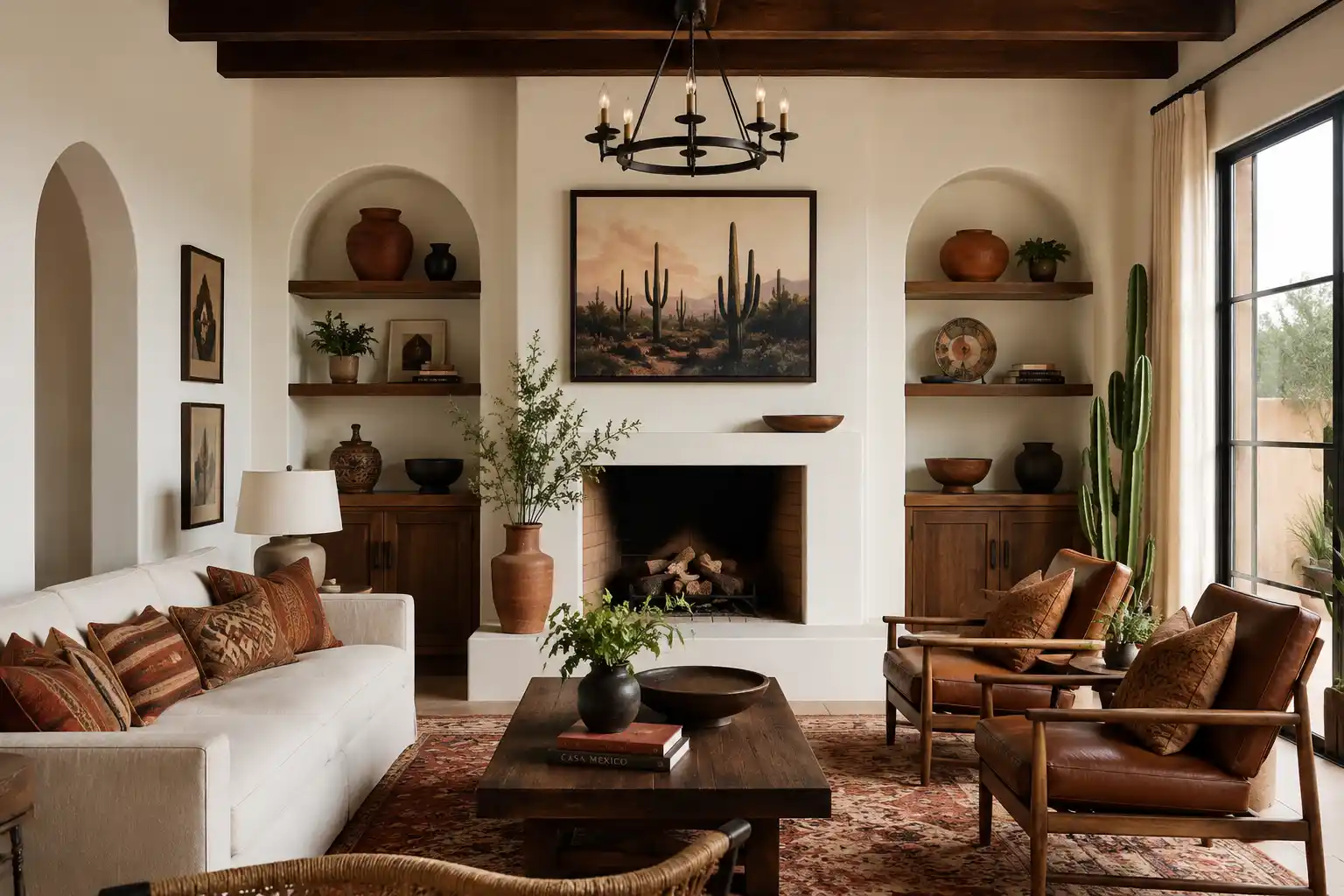
The modern Mexican living room prioritizes conversation and contemplation over entertainment. Low-profile seating encourages connection with both the space and the people within it, an approach we frequently bring to life across our curated residential portfolios.
Key Elements:
- Seating: Reimagined equilateral chairs and sofas with slimmed-down proportions. Look for frames in dark-stained mesquite or walnut paired with buttery, vegetable-tanned leather that develops a rich patina over time. Avoid overly plush sectionals; instead, choose modular pieces with clean lines that can be reconfigured.
- Walls: Micro-cement or hand-troweled plaster in bone white or warm sand creates a tactile backdrop. Consider one accent wall in a subtle tezontle-inspired textured finish for depth.
- Statement Pieces: A single large-scale textile artwork, perhaps a contemporary interpretation of Oaxacan huipil motifs woven in neutral tones with metallic threads, becomes the focal point. Position it above a floating console crafted from a single slab of reclaimed wood.
- Rugs: Layer a large natural jute or sisal base rug with a smaller vintage or reproduction Zapotec wool runner in muted terracotta and indigo.
Combine ambient sources, recessed lighting with warm 2700K bulbs, with sculptural floor lamps featuring hand-blown glass and wrought iron details. Avoid overhead fixtures that flatten the space.
Maintain at least 40% negative space around major furniture pieces. The room should breathe.
The Kitchen: Heritage in Motion
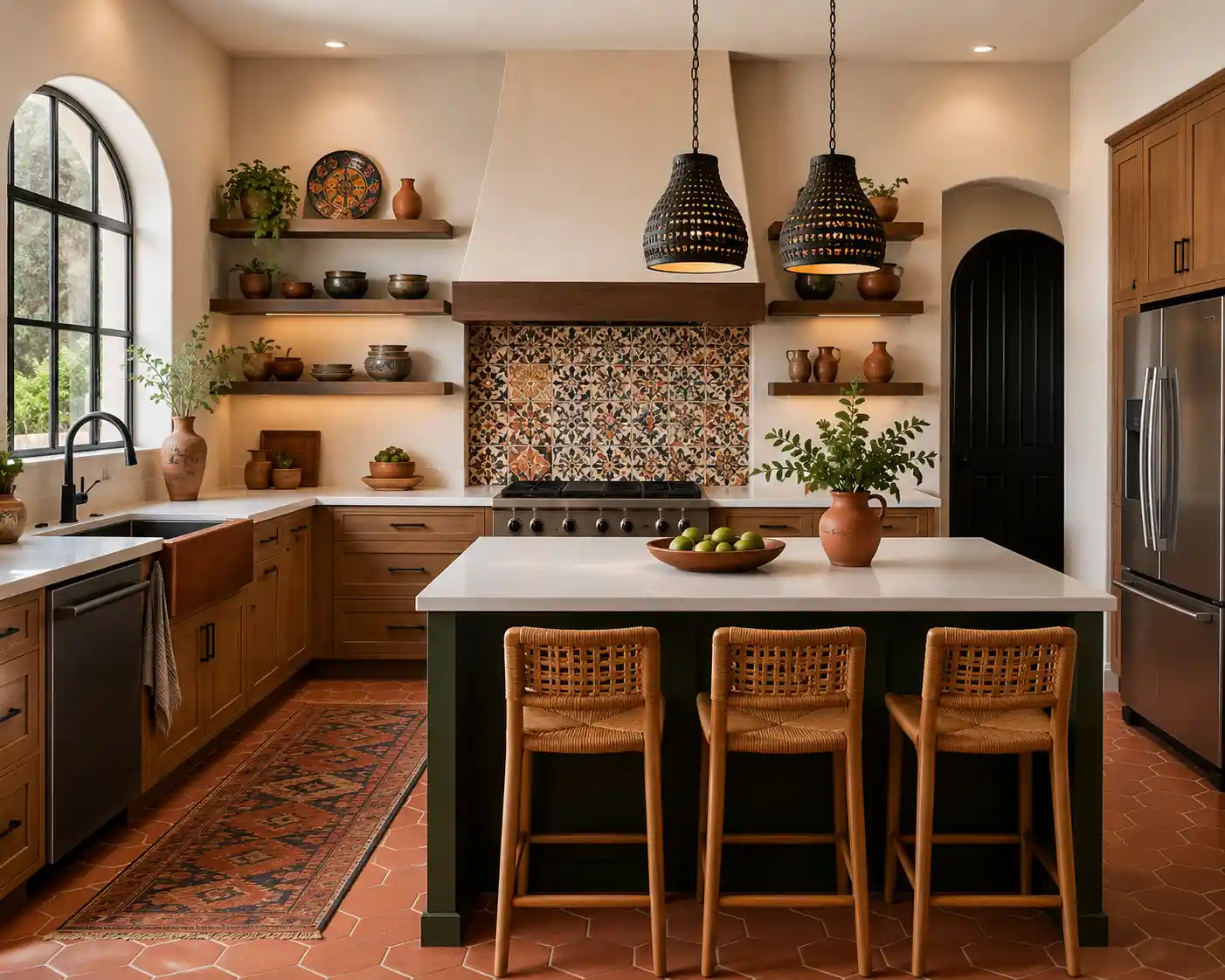
The kitchen embodies the heart of Mexican living, a place of gathering, preparation, and daily ritual. Our modern interpretations of kitchen design seamlessly integrate contemporary function with quiet cultural nods.
Essential Features:
- Cabinetry: Flat-panel or shaker-style cabinets in matte lacquer (warm white or deep charcoal) or natural wood. Hardware should be minimal, brushed brass or blackened steel pulls.
- Backsplash: Subtle Talavera tile used strategically, perhaps only on the main cooking wall in a monochromatic pattern of bone and sand tones. For a more contemporary take, use handmade zellige-style tiles in earthy glazes that catch the light differently throughout the day.
- Open Shelving: Thick solid wood shelves (oak or walnut) displaying curated collections of handmade pottery, copper vessels, and everyday ceramics. Limit to two or three shelves to maintain visual calm.
- Island: A substantial island with a live-edge wood top or honed marble. Incorporate woven bar stools in natural fibers.
- Material: Extend the same micro-cement or plaster from living areas into the kitchen for seamless flow, grounding the space in continuity.
Integrate a small herb garden or potted citrus near a window to reinforce the indoor-outdoor relationship that defines Mexican design.
The Bedroom: Sanctuary of Calm
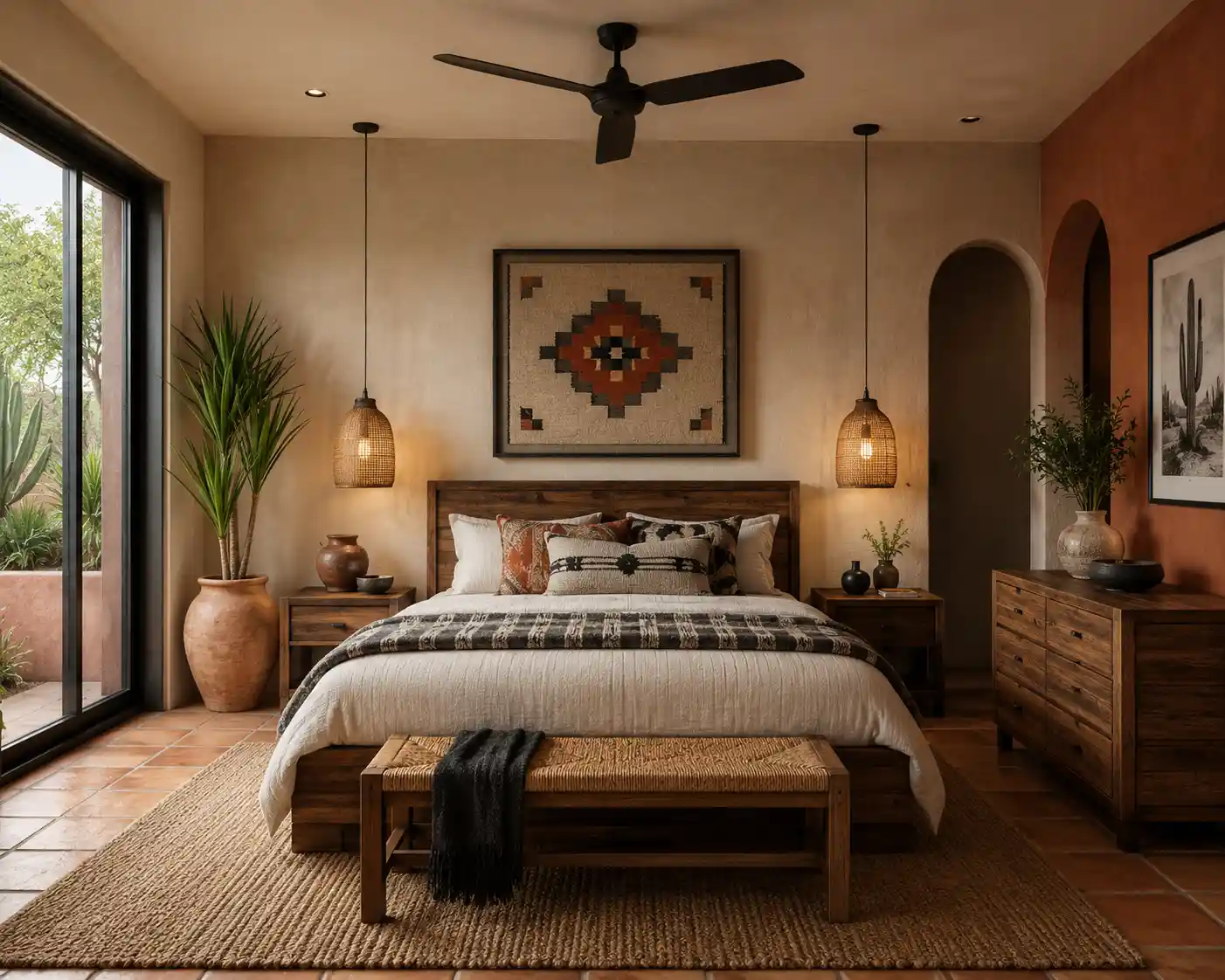
Bedrooms in this aesthetic serve as restorative retreats, balancing softness with structure.
Signature Elements:
- Bedding: Pure linen or linen-blend sheets in stone, oat, or warm ivory. Layer with lightweight wool throws in terracotta or deep charcoal.
- Headboard: A dramatic curved archway detail behind the bed, either architectural (plaster or wood) or through a large-scale woven textile panel.
- Nightstands: Asymmetrical pairings, one in polished concrete, another in hand-carved wood, create visual interest while maintaining balance.
- Window Treatments: Floor-to-ceiling linen curtains that diffuse light softly. When possible, incorporate operable wooden shutters for authentic climate control and character.
- Accent: A single ceramic vessel with dried grasses or a small collection of pre-Columbian-inspired objects (ethically sourced reproductions) on a dresser.
Use terracotta sparingly, perhaps on a throw blanket, a ceramic lamp base, or the reverse side of a pillow, to add warmth without overwhelming the neutral foundation.
The 4 Golden Pillars of Modern Mexican Design
A modern Mexican home isn’t just built; it is curated through a deep respect for nature, history, and craftsmanship. To achieve this look without making it feel cluttered or dated, your space should be anchored by four core principles.
1. Color Palette: Earth, Sky, and Stone
Successful modern Mexican interiors follow a disciplined 60/30/10 approach:
- 60% Base: Bone white, warm sand, limestone gray, and soft taupe. These create the luminous, light-reflecting foundation.
- 30% Secondary: Warm ochre, terracotta, rust, and burnt sienna. These provide emotional grounding and depth.
- 10% Accent: Deep forest green, midnight indigo, or charcoal. Used sparingly for moments of richness, perhaps in a velvet pillow, a painted interior cabinet, or a sculptural object.
All colors should appear as if derived from natural pigments and earth deposits. Avoid anything that reads as synthetic or high-chroma.
2. Materials: Truth and Tactility
Prioritize materials with inherent character:
- Raw Timber: Mesquite, walnut, and parota with visible grain and live edges.
- Wrought Iron: Used in lighting, window grilles, or subtle railing details with organic, hand-forged textures.
- Woven Jute & Sisal: For rugs, ottomans, and lamp shades, providing organic contrast to smoother surfaces.
- Polished Concrete & Stone: Floors and countertops that develop subtle patina and reflect light beautifully.
- Hand-Plastered Walls: The subtle variations in texture catch light in ways that paint cannot replicate.
3. Textures: Layered with Intention
Texture creates the emotional resonance of the space. Focus on:
- Hand-loomed fabrics with visible weave and slight irregularities.
- Rough-hewn wood against smooth plaster.
- Woven fibers against cool stone.
- Matte surfaces against occasional metallic glints (brass, copper).
Textures should be used like notes in music; variation creates interest, but harmony prevents chaos. Never more than three dominant textures in a single view.
4. Light & Nature: The Eternal Indoor-Outdoor Dialogue
No element defines modern Mexican design more than its relationship with the exterior. Maximize this through:
- Large glass openings with minimal framing.
- Deep overhangs and covered patios that extend living space.
- Strategic placement of indoor plants, monstera, birds of paradise, and olive trees that blur boundaries.
- Natural light management through architectural elements rather than heavy window coverings.
In warmer climates, this often includes a central courtyard or atrium that becomes the spiritual heart of the home.
Common Modern Mexican Interior Design Mistakes to Avoid
Even experienced designers can misinterpret this aesthetic. Here are the pitfalls we see most often:
- Cheap Imitations: Mass-produced Mexican-inspired items with plastic weaves, printed tiles, or synthetic dyes quickly reveal their lack of authenticity. Invest in genuine craft or high-quality reproductions.
- Over-Cluttering: This style celebrates negative space. Too many objects, even beautiful ones, destroy the contemplative quality.
- Neon or Primary Colors: Bright turquoise, hot pink, and acid yellow have no place here. Stick to mineral and vegetal tones.
- Ignoring Climate: In hot, sunny regions, dark floors and heavy fabrics can make spaces feel oppressive. Prioritize light-reflective surfaces.
- Cultural Appropriation Without Understanding: Research the heritage behind elements. Work with artisans or specialists who understand the context.
- Inconsistent Scale: Mixing too many small objects without larger architectural gestures creates visual noise.
Creating a Timeless Modern Mexican Home
Modern Mexican interior design is ultimately about balance. It combines the clean simplicity of contemporary architecture with the warmth, texture, and craftsmanship that have defined Mexican design traditions for generations.
Rather than relying on bold themes or decorative excess, the style draws its character from natural materials, earthy colors, handcrafted details, and a strong connection between indoor and outdoor living. The result is a home that feels welcoming, timeless, and deeply connected to its surroundings.
Whether you’re designing a new home or updating an existing space, focusing on authentic materials, thoughtful restraint, and layered textures can help you create a modern Mexican interior that feels both sophisticated and lived-in. When these elements work together, the space becomes more than a design style; it becomes an environment that supports everyday comfort, beauty, and a sense of place.
FAQs About Modern Mexican Home Design
Q: What exactly distinguishes Modern Mexican design from Southwestern style?
Modern Mexican focuses on clean architectural lines, micro-cement, and refined artisanal details, whereas Southwestern style is heavier on adobe textures, rustic wood, and bolder turquoise elements.
Q: What is the typical budget range for a full Modern Mexican interior refresh?
For a luxury 2,500 sq ft home, expect $180–$350 per square foot, depending on the level of custom millwork, imported textiles, and artisanal pieces.
Q: Is Modern Mexican suitable for smaller homes or urban apartments?
Yes. Emphasize low-profile furniture, a light neutral palette, and strategic texture on key surfaces to create depth without crowding the space.
Q: How do I prevent the space from feeling too minimalist or empty?
Use one or two strong hero pieces, like a large textile artwork or a sculptural wooden console, and rely on natural material variations rather than adding more decorative objects.
Bringing Modern Mexican Design Into Your Home
The beauty of modern Mexican interiors lies in their ability to feel both sophisticated and welcoming. By focusing on natural materials, handcrafted details, and thoughtful restraint, homeowners can create spaces that remain relevant and beautiful for years to come.
For expert guidance on incorporating these design principles into your own project, contact Karamia Designs to learn more.