

Walk-In Closet Design Ideas for Modern Homes
A beautifully designed bedroom sets the tone for your home, but a cluttered wardrobe can quietly disrupt that experience. Overflowing shelves, poor lighting, and inefficient layouts don’t just affect how your space looks; they impact how your day begins and ends.
This is where thoughtful closet design ideas come in, transforming storage into something intuitive, organized, and visually refined.
More than just a storage upgrade, a well-designed walk-in closet introduces order, clarity, and ease into your daily routine. It transforms how you interact with your belongings while elevating the overall feel of your home.
In modern interiors, walk-in closets are no longer reserved for large homes or luxury estates. With the right planning, they can be tailored to suit compact layouts, urban apartments, and expansive residences alike, balancing functionality with refined aesthetics.
What Is a Walk-In Closet?
A walk-in closet is a dedicated storage space designed for you to step inside and access your wardrobe comfortably. Unlike traditional wardrobes, it allows for better organization, visibility, and personalization.
At its core, it’s about creating a space that works with your lifestyle. When designed thoughtfully, it becomes more than storage; it becomes part of how your home functions every day.
A well-planned closet improves organization by assigning a clear place to every item, eliminating the frustration of searching through clutter, and supporting a smoother daily routine. Just as importantly, it integrates seamlessly with your bedroom’s design, contributing to a cohesive and elevated interior rather than feeling like a separate utility space.
Popular Layout Options
The layout is the foundation of any successful closet. It determines how efficiently the space functions and how comfortable it feels to use.
U-Shaped Layout
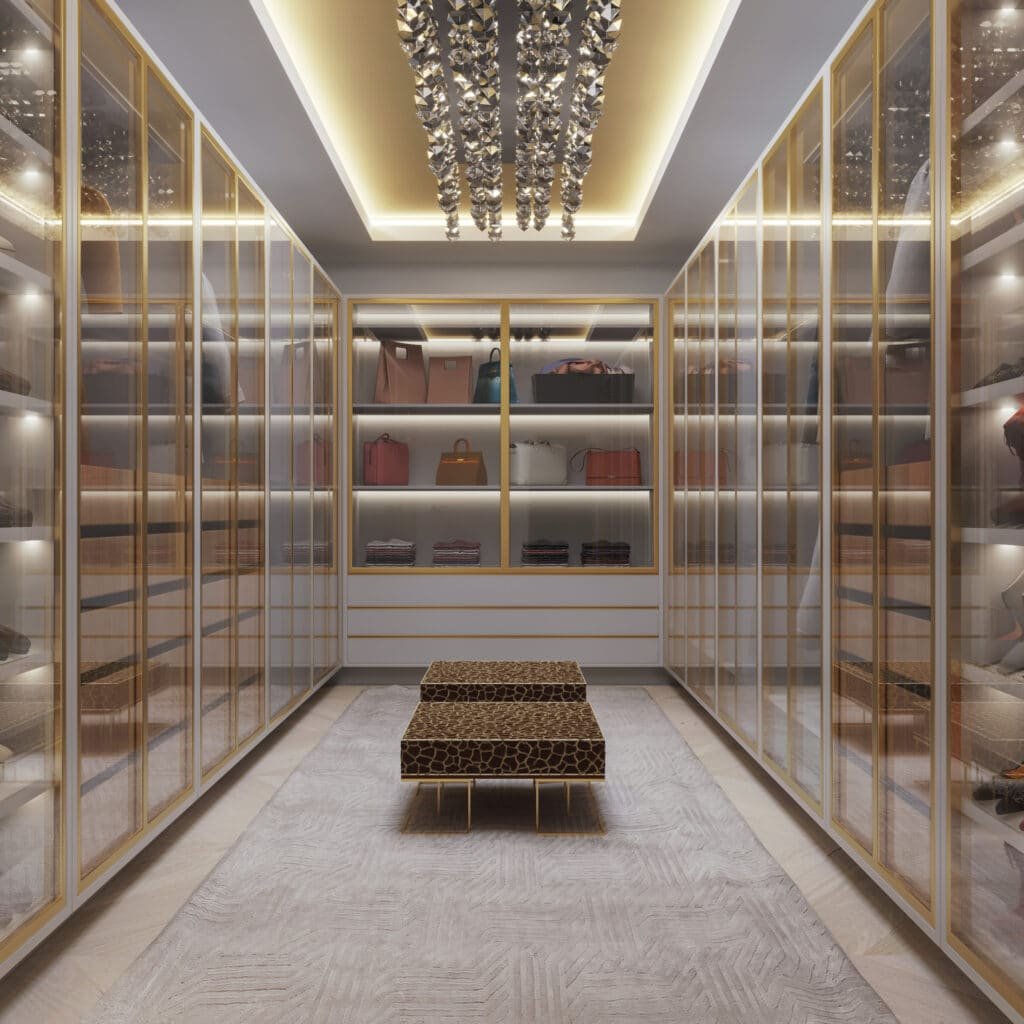
The U-shaped layout is one of the most efficient configurations, especially for medium to large spaces. Utilizing three walls, it creates a continuous flow of storage that naturally divides into zones for hanging, shelving, and drawers.
This layout feels structured and balanced, making it ideal for shared closets where organization needs to remain clear without visual clutter. It’s also commonly associated with a luxury dressing space, as it allows for a seamless combination of display and concealed storage.
L-Shaped Layout
An L-shaped layout works well in corners or moderately sized rooms, offering flexibility without overwhelming the space. By using two walls, it maintains an open side that improves movement and prevents the closet from feeling enclosed.
This configuration is particularly effective for compact closet design ideas, as it strikes a balance between storage capacity and spatial comfort. It can also be more easily integrated into existing layouts, making it a practical choice for renovations.
Single-Wall Layout
For compact homes or narrow spaces, a single-wall layout offers a clean and minimal solution. All storage is aligned along one side, creating a streamlined and visually quiet design.
This approach works especially well in modern closet design, where simplicity and restraint are key. It’s easy to maintain, highly functional, and pairs naturally with sliding or open wardrobe systems.
Island Layout
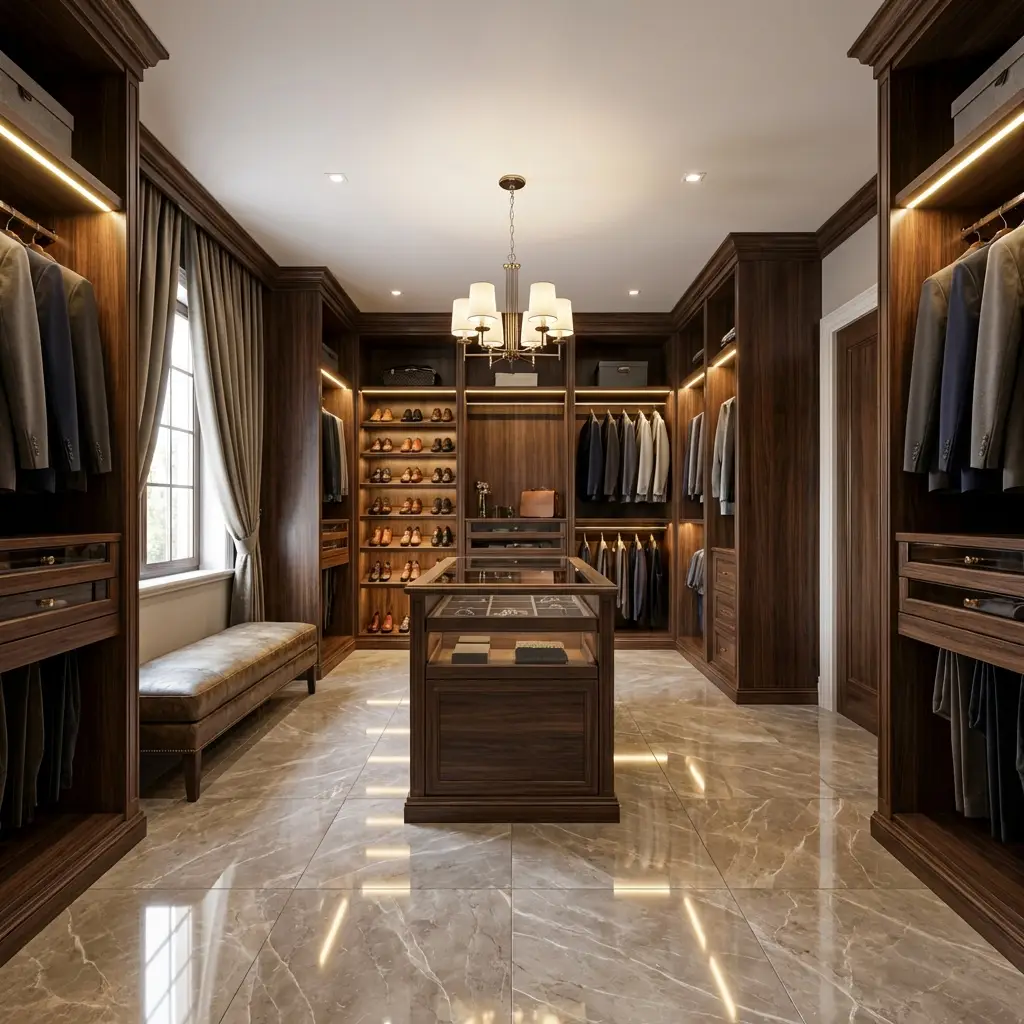
In larger closets, introducing an island transforms the space from purely functional to experiential. It acts as a central anchor, adding both storage and visual structure.
Beyond providing drawers and surface space, an island enhances the overall sense of luxury. It allows the closet to feel more like a personal dressing room, intentional, spacious, and thoughtfully composed.
Modern Design Ideas
Modern closets focus on clarity, material harmony, and understated elegance. The goal is not to overdesign the space, but to create something that feels effortless and intuitive.
Minimalist cabinetry plays a key role in achieving this. Flat-panel doors, concealed handles, and seamless finishes reduce visual noise, allowing the space to feel calm and cohesive. This approach is especially effective in smaller closets, where simplicity can make the room feel more open.
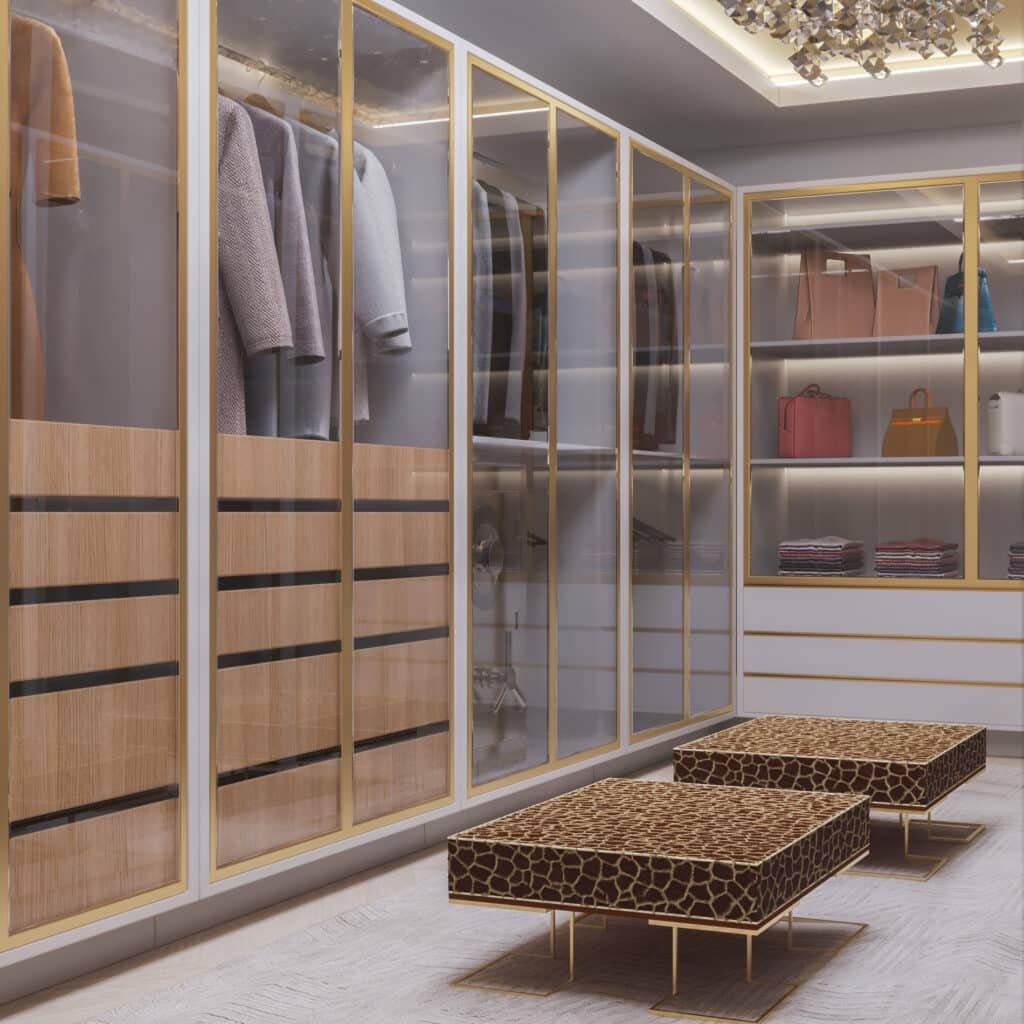
Incorporating glass and open shelving introduces depth and variation. Glass-front cabinets allow you to display selected items while keeping them protected, while open shelves provide easy access to everyday essentials. The key is balance; too much openness can feel cluttered, while too much concealment can feel heavy.
Lighting is another defining element. Integrated LED strips, soft ambient lighting, and subtle accent lighting not only improve visibility but also shape the atmosphere of the space. A well-lit closet feels intentional and inviting, rather than purely functional.
Neutral color palettes further reinforce this sense of calm. Soft whites, muted greys, and warm wood tones create a timeless backdrop that allows your wardrobe to take focus. When paired with mirrors, whether full-length or integrated panels, the space feels brighter, larger, and more refined.
This approach reflects how studios like Karamia Designs think about modern closets, not as standalone storage, but as a seamless extension of the overall interior.
Small Walk-In Closet Ideas
Designing a smaller walk-in closet requires a more strategic approach, where every element serves a purpose without overwhelming the space.
One of the most effective strategies is to fully utilize vertical space. Extending storage to the ceiling allows you to increase capacity without expanding the footprint, while upper sections can be reserved for seasonal or less frequently used items.
Double hanging rails are another simple but impactful solution. By dividing hanging space into two levels, you effectively double storage capacity while maintaining accessibility.
To preserve movement within the space, sliding or pocket doors are often preferred over traditional hinged doors. They eliminate unnecessary clearance requirements and contribute to a more seamless flow.
Visually, lighter color schemes help create a sense of openness. Soft neutrals, reflective surfaces, and minimal contrast prevent the space from feeling confined, while integrated lighting ensures that every corner remains usable and well-defined.
Smart Storage & Organization
This is one area where bullets actually improve clarity and usability.
A well-organized closet is built around thoughtful zoning and precise storage solutions:
- Defined hanging zones: Separate areas for long garments, mid-length pieces, and shorter items help maintain order and prevent overcrowding.
- Dedicated shoe storage: Adjustable shelves or pull-out systems keep footwear visible, protected, and easy to access.
- Accessory organization: Drawer dividers, trays, and hooks ensure smaller items like jewelry, belts, and bags are neatly arranged.
- Hidden storage: Closed cabinets and concealed compartments help maintain a clean visual appearance while storing less frequently used items.
These closet storage solutions are what turn a visually appealing closet into a highly functional one.
Luxury Features to Consider
For those looking to elevate their space further, certain additions can enhance both functionality and experience.
A central island introduces structure and provides additional storage, while also acting as a surface for organizing outfits. Seating, even in a compact form, adds comfort and makes the space feel more residential rather than purely utilitarian.
An integrated vanity allows the closet to function as a complete dressing space, combining storage with grooming. Meanwhile, statement lighting, whether a sculptural pendant or a subtle chandelier, adds a layer of personality and refinement without compromising practicality.
These elements define what we typically associate with a high-end dressing space, where design goes beyond function to create a more immersive experience.
Materials & Finishes Guide
Material selection plays a significant role in how the closet feels and performs over time.
Wood offers warmth and a timeless quality, developing character as it ages, while laminate provides durability and consistency with a wider range of finishes. The choice often depends on the desired aesthetic and maintenance expectations.
Glass and metal accents are commonly used in modern closets to introduce contrast and lightness. Glass keeps the design visually open, while metal adds structure and subtle definition.
A cohesive color palette ties everything together. Neutral bases ensure longevity, while small accent tones introduce personality without overwhelming the space. Matte finishes, in particular, contribute to a softer and more sophisticated overall look.
Common Mistakes to Avoid
This is another section where bullets make sense for quick readability:
- Ignoring lighting, which leads to poor visibility and reduces usability
- Overcrowded storage makes the space difficult to navigate
- Lack of zoning, resulting in disorganization over time
- Excessive open shelving, which can quickly appear cluttered
- Poor proportions, especially using oversized elements in compact spaces
Avoiding these mistakes is just as important as choosing the right design features.
1. What is the ideal size for a walk-in closet?
There’s no single standard, but a functional layout typically starts at around 5 to 7 feet in width. This allows enough room for storage and comfortable movement. Larger spaces simply offer more flexibility for additional features like islands or seating.
2. What layout works best for different spaces?
The right layout depends on the room size and shape. U-shaped layouts maximize storage in larger areas, while L-shaped and single-wall configurations are more suitable for compact spaces where maintaining openness is important.
3. How can I make a small closet feel more spacious?
A combination of light colors, mirrors, and well-planned lighting can significantly improve how the space feels. Keeping the layout simple and using vertical storage also helps create a more open and efficient environment.
4. What are the most important storage features to include?
Effective storage usually includes a mix of hanging sections, drawers, shelving, and dedicated areas for shoes and accessories. Dividing the space into clear zones makes it easier to maintain order and improves everyday usability.
5. Which materials work best for a modern closet design?
Materials like wood, laminate, glass, and metal are commonly used. Wood adds warmth, laminate offers durability, and glass or metal accents help create a more contemporary and refined look.
Conclusion
A walk-in closet is more than a storage solution; it’s a space that supports your daily routine while reflecting your personal style. The best walk-in closet design ideas combine thoughtful layouts, intelligent organization, and a refined aesthetic to create something that feels effortless to use.
Whether you’re designing a compact space or a full dressing room, the focus should always remain on balance, between openness and structure, display and concealment, beauty and practicality.
When approached with intention, even a simple closet can become one of the most satisfying and functional spaces in your home.
If you’re considering a more thoughtful approach to your space, connect with Karamia Designs to discuss ideas tailored to your lifestyle.