

Is a Wet Room Better Than a Walk-In Shower? Design Guide
Imagine stepping into your freshly remodeled bathroom, only to realize that every time you take a shower, your towels end up damp, your toilet paper is soaked, and your floor is a slippery hazard. When remodeling a bathroom in the Los Angeles area, choosing between a wet room and a walk-in shower is one of the most significant structural and financial decisions you will face.
As a bathroom designer who has conceptualized layouts across Southern California, I can tell you that for the vast majority of LA homes, the Walk-In Shower emerges as the undisputed winner. While a wet room offers a stunning, zero-threshold luxury aesthetic, my clients often realize that the reality involves a massive upfront budget, high daily maintenance, and complex waterproofing. From a designer’s perspective, the walk-in shower takes the crown because it perfectly delivers that high-end “LA style” frameless look, while keeping costs manageable, water contained, and your home’s future resale value secure.
Many homeowners make their choice based on aesthetics alone, overlooking critical technical and plumbing trade-offs that can derail project budgets. Below, I’ll break down exactly why the walk-in shower wins for the average LA lifestyle, and the rare instances where I would still recommend splurging on a wet room.
Wet Room vs Walk-In Shower: Key Differences
The primary distinction between the two concepts comes down to the scope of waterproofing (known as tanking) and the floor layout.
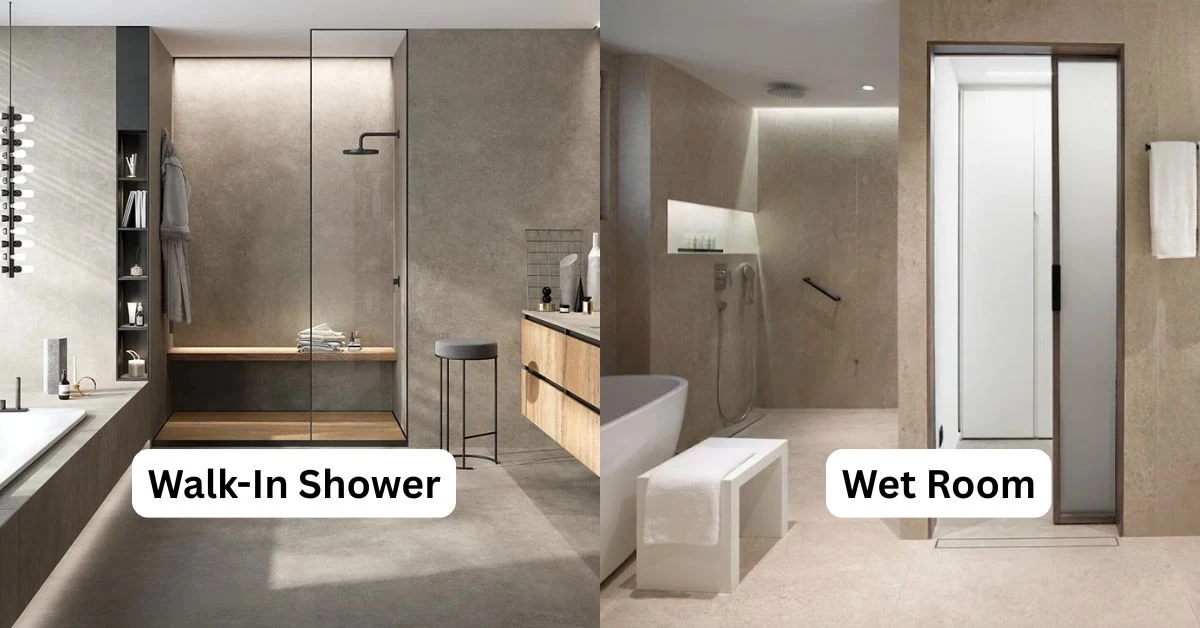
- Wet Room: In a true wet room, the entire bathroom floor and walls are completely waterproofed. The subfloor is professionally engineered with a precise slope that channels water directly into a central or linear drain. This ensures the space complies with California Building Standards Commission (CBSC) guidelines for proper drainage and moisture control.
- Walk-In Shower: A walk-in shower is a designated zone within a larger bathroom. It typically utilizes a low-profile prefabricated shower base (pan) or a slightly recessed floor section separated by a fixed glass panel. Waterproofing is concentrated heavily within this specific footprint rather than across the entire room, meaning water is intentionally contained.
Comparison of Features
|
Feature |
Wet Room | Walk-In Shower |
|
Design Aesthetic |
Open-concept, seamless, modern | Defined shower zone, structured |
|
Upfront Cost |
Higher investment (due to full-room waterproofing) | Moderate, highly budget-friendly |
|
Accessibility |
Zero-threshold (ideal for aging-in-place/wheelchairs) |
Low-threshold (mostly accessible, but has a small curb) |
| Daily Upkeep | Requires wiping down a larger, damp surface area |
Only the designated shower zone needs regular cleaning |
| Water Containment | The entire room is rated for moisture |
Water is kept within the glass/base footprint |
| Best Suited For | Compact spaces, universal design, luxury primary suites |
Busy families, standard layouts, quick renovations |
Evaluating the Advantages and Disadvantages
Disadvantages of a Wet Room
- Moisture Migration: Because there is no physical barrier, mist and overspray can travel. This requires strategic placement of bath mats, wooden cabinetry, and toilet paper fixtures to keep them dry.
- Temperature Drops: The open layout allows steam to disperse quickly, meaning wet rooms can feel cooler underfoot unless paired with underfloor radiant heating.
- Zero Margin for Error: Flawless professional execution is mandatory. A minor flaw in the waterproofing membrane can lead to catastrophic subfloor water damage.
Disadvantages of a Walk-In Shower
- Not Completely Barrier-Free: Walk-in showers still possess a low curb or threshold, which can pose challenges for individuals relying on wheelchairs or specialized mobility aids.
- Glass Maintenance: Large glass panels require frequent squeegeeing to prevent hard water spots and soap scum buildup.
Advantages and Safety Benefits
- Wet Room Safety: The zero-threshold nature of a wet room eliminates tripping hazards entirely, making it the premier choice for universal design and long-term aging-in-place.
- Walk-In Practicality: For households with young children, the contained footprint of a walk-in shower offers a more predictable, less messy daily routine.
Cost Realities and Resale Value
- Upfront Installation Costs: A wet room demands a much larger share of a renovation budget due to specialized labor, subfloor sloping, and heavy-duty waterproofing membranes.A walk-in shower keeps costs manageable because the waterproof envelope is smaller, allowing for the use of pre-formed shower pans and standard glass panels.
- Impact on Resale Value: In design-forward, luxury real estate markets, a professionally installed wet room acts as a premium selling point. However, for standard suburban single-family homes, a walk-in shower holds a safer, broader appeal. Everyday buyers often prefer a familiar layout and look for at least one traditional bathtub to remain in the home for future resale.
How to Choose the Right Layout
Use these five criteria to determine which setup matches your home’s infrastructure and lifestyle needs:
- Budget Limits: If you want an open aesthetic but need to keep costs down, choose a low-profile walk-in shower with a frameless glass panel as a cost-effective middle ground.
- Space Constraints: If the bathroom is compact and needs to look larger, opt for a wet room to remove visual barriers.
- Household Dynamics: If you have a busy household with young kids, select a walk-in shower to contain the mess. If you are future-proofing for seniors or mobility restrictions, select a wet room.
- Maintenance Tolerance: If you dislike wiping down bathroom floors after a shower or dealing with damp secondary areas, stick with a walk-in shower.
- Structural & Plumbing Assessment: Before finalizing your choice, have a licensed plumber or contractor evaluate your floor joists to confirm if the subfloor can safely handle the sloping required for a wet room drain.
Frequently Asked Questions
What are the main disadvantages of a wet room layout?
The primary disadvantages include higher upfront installation costs, the requirement for flawless professional waterproofing, and moisture migration. Because there is no barrier, water spray and mist can make the entire bathroom floor damp, requiring strategic placement of fixtures and mats.
Why might someone choose a walk-in shower over a wet room?
Walk-in showers are generally more budget-friendly, faster to install, and keep water restricted to a single designated zone. They also offer a familiar layout that appeals broadly to prospective homebuyers, making them a safer choice for resale.
Can you install a standard toilet inside a wet room?
Yes. Toilets can be placed inside a wet room, provided the bathroom floor’s drainage slope is correctly engineered, and the plumbing fixtures are properly sealed and rated for high-moisture environments.
Is a wet room safe for older adults or those planning to age in place?
Yes. Wet rooms are exceptionally safe for individuals with limited mobility. The completely flat, curbless floor eliminates traditional tripping hazards and allows for seamless wheelchair or walker access.
Ready to Build Your Dream Bathroom?
Don’t risk costly plumbing mistakes or a layout that doesn’t fit your daily life. Before making your final choice, let a professional team assess your specific floor plan, verify structural constraints, and draft a blueprint that perfectly balances your aesthetic vision with your real-world budget.
Transform your space today. Reach out to the design experts at Karamia Designs to schedule a personalized consultation, and let’s bring your ideal bathroom layout to life!