

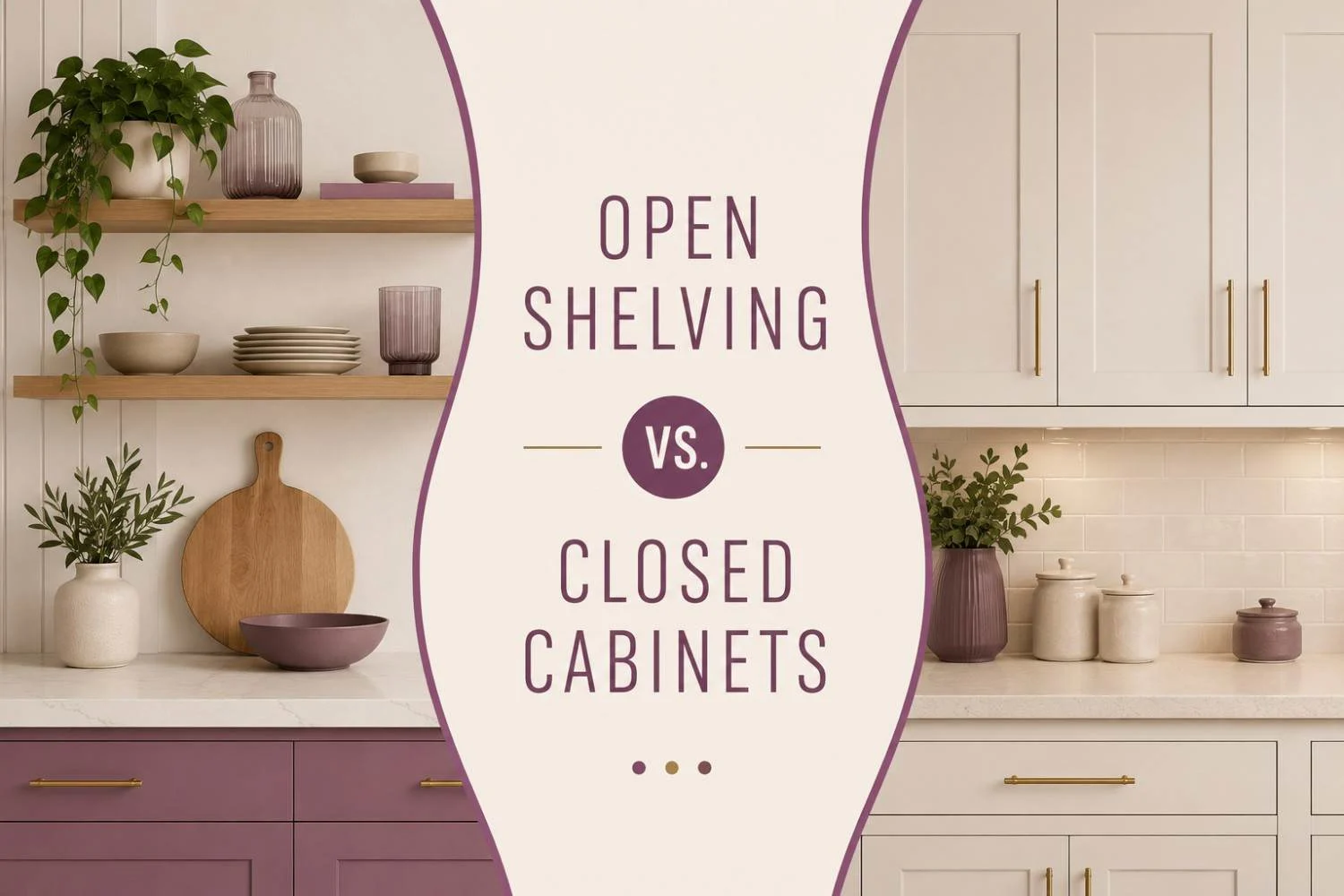
Your laundry room is the hardest-working small room in the house. It deals with lint, steam, spilled detergent, and a constant stream of grab-and-go items. Choosing between open shelving and closed cabinets here is not the same as choosing for a kitchen, and a pretty photo online will not tell you how a layout holds up on a busy Tuesday.
After more than 22 years of designing homes, we have seen both choices succeed and fail. This guide helps you pick the one that fits how you actually live.
If you want help turning a decision into a layout, our team offers professional storage planning for laundry rooms, closets, and kitchens.
Closed cabinets win for most families because they hide clutter, block lint, and keep chemicals away from kids and pets. Open shelving works best in small amounts, right above the machines, for items you use every day. For most homes, a hybrid of both is the smartest choice.
What Is the Best Type of Shelving for a Laundry Room?
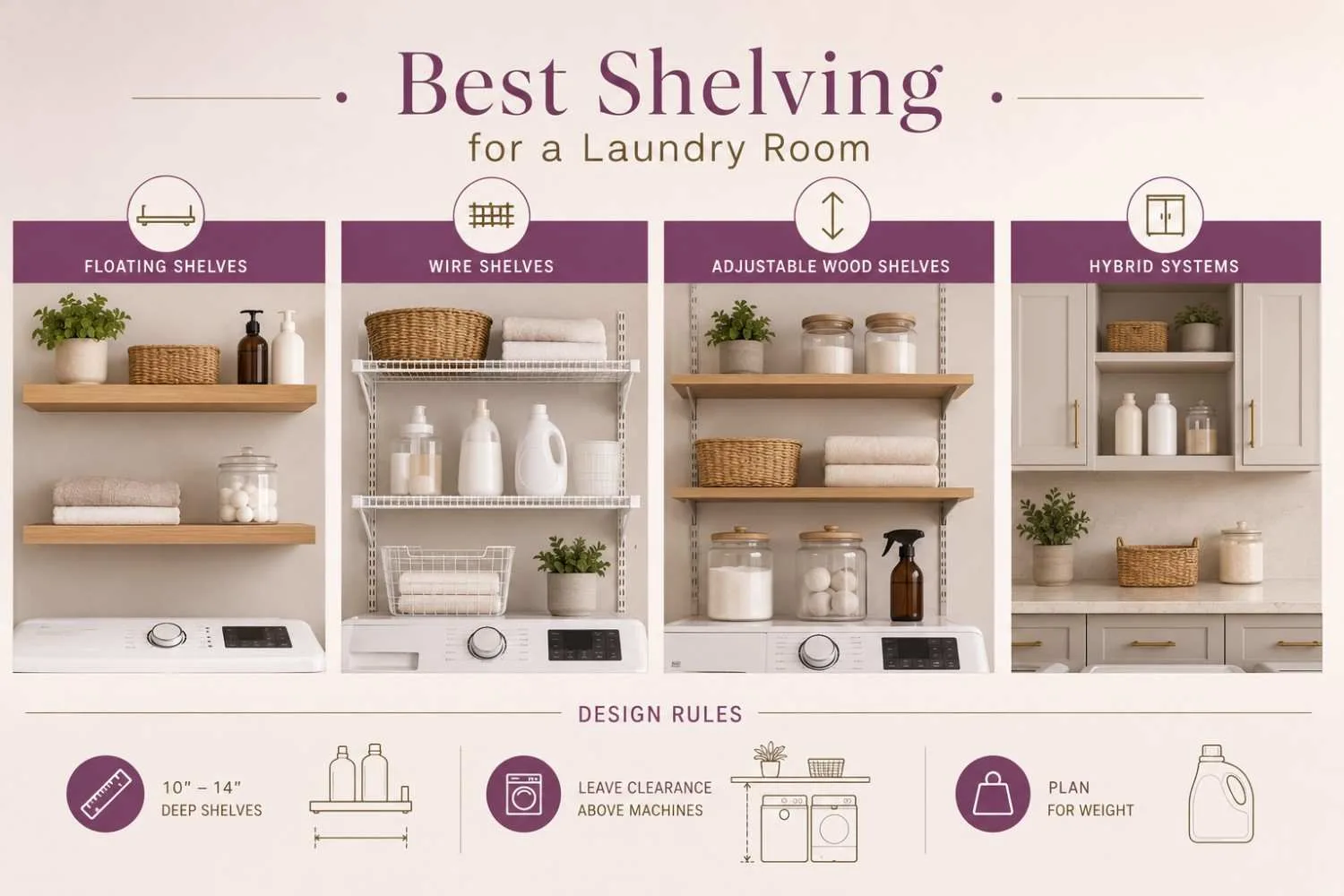
The best shelving is the kind you will keep tidy and that can hold real weight. Your main options:
- Floating shelves: Clean and modern, but they need solid wall anchoring. Large detergent jugs are heavy.
- Wire shelves: Good airflow and easy to install, though small items can tip or slip through.
- Adjustable wood shelves: Flexible and sturdy, and they handle changing needs well.
- Hybrid systems: Shelves paired with cabinet sections below or beside them.
A few design rules we follow: keep shelf depth between 10 and 14 inches so nothing gets lost in the back. Leave enough clearance above the machines to open lids and reach the controls comfortably. Weight plan, because a full liquid detergent bottle is heavier than it looks.
What Are the Disadvantages of Open Shelving?
Open shelving looks great on day one. The problems show up by month three:
- Dust and lint settle on everything. In a laundry room, this happens faster than anywhere else.
- Styling pressure. Open shelves need to look good all the time, which is hard when they’re filled with boxes of dryer sheets.
- Less protection for chemicals. Bleach and stain removers sit exposed.
- More cleaning. Items need wiping more often.
- Humidity exposure. Steam from the dryer and washer reaches open items, especially cardboard and fabric.
Our opinion: open shelving in a laundry room is a styling choice that requires maintenance. If you will not wipe it regularly, it is not the right choice.
What Is the Best Cabinet for a Laundry Room?
The most useful option is usually a tall cabinet with doors and adjustable shelves, because it stores brooms, bulk supplies, and cleaning products in one footprint. Upper cabinets above the washer and dryer are the next best use of vertical space.
What to look for:
- Adjustable interior shelves. More important here than in a kitchen, because laundry items vary widely in size.
- Moisture-resistant materials. Sealed wood, thermofoil, or properly finished MDF hold up better in damp rooms.
- Soft-close hinges. They protect the doors from daily slamming.
- Smart hardware. Pull-out bins and hampers make cabinets work harder.
Before installing uppers, check that the washer lid or dryer door can open fully beneath them. Top-load machines need extra clearance, so measure first.
Open Shelving Pros and Cons in a Laundry Room
Pros: easy access, a lighter and airier look, better airflow, and a simple installation.
Cons: visible clutter, dust and lint buildup, and safety risks if chemicals are within a child’s reach.
Closed Cabinets Pros and Cons in a Laundry Room
Pros: hidden mess, protection from dust and lint, child and pet safety, and a polished, finished look.
Cons: slower access for daily items, a larger investment, and the chance of trapped moisture if the room has poor ventilation.
Should You Mix Open Shelving and Closed Cabinets?
For most homes, yes. Here is the layout we recommend most often:
- One open shelf right above the machines for daily items: your current detergent, a small basket of stain sticks, and a plant or two if the room gets light.
- Closed cabinets above and beside the shelf for bulk supplies, chemicals, and anything you do not want to see.
- A closed tall cabinet at the end of the run for the mop, broom, iron, and ironing board.
This approach works especially well in small laundry rooms and closet-style setups, where one open shelf gives breathing room, and the cabinets keep the space calm.
For more ideas on zoning your storage, take a look at our guide to organizing a kitchen the same way.
How Do Cost, Installation, and Long-Term Value Compare?
Without getting into numbers, the general pattern is simple. Open shelves are the more budget-friendly and DIY-friendly route, and many homeowners can install them with the right anchors and a level. Cabinets are a bigger investment, but they add lasting storage, protect your supplies, and tend to make a laundry room feel finished, which buyers notice. If your budget is limited, a smart compromise is to invest in cabinets where you need protection and use shelves where you need convenience.
What Materials and Humidity Tips Do Most People Miss?
Humidity is the quiet enemy of laundry rooms. A few practical habits help:
- Choose sealed or moisture-resistant finishes, and avoid untreated raw wood near the dryer.
- Wipe open shelves regularly. A quick pass every couple of weeks keeps lint from building up.
- Vent the dryer properly to the outside so steam does not circulate in the room.
- Leave small gaps between stored items so air can move.
- Run a fan or crack a window after heavy laundry days.
How Do You Decide for Your Home?
Ask yourself five questions:
- How big is your household? More people means more supplies, which favors closed storage.
- Can guests see the room? A visible laundry room leans toward cabinets.
- Do you have children or pets? Chemicals should be behind doors.
- How often do you do laundry? Daily washers benefit from one open shelf for speed.
- How much maintenance will you do? Be honest. Open shelves need more.
If you answered “closed” to three or more, go with cabinets and add one open shelf as an accent.
FAQs
Q 1. What is the best type of shelving for a laundry room?
Adjustable wood shelves or sturdy floating shelves with strong wall anchoring work best, kept 10 to 14 inches deep.
Q 2. What are the disadvantages of open shelving?
Dust, lint, humidity exposure, and the need to keep items looking tidy. Chemicals are also less protected.
Q 3. What is the best cabinet for a laundry room?
A tall cabinet with doors and adjustable shelves in a moisture-resistant finish gives you the most flexible storage.
Q 4. Do open shelves get too dusty in a laundry room?
Yes, they collect lint faster than most rooms. Regular wiping and a well-vented dryer help, but closed storage is better for items you rarely use.
Q 5. Can I install cabinets above a top-load washer?
Yes, as long as the lid can open fully. Measure the open height first, and consider a shallower cabinet or a shelf instead.
Final Thoughts
Open shelving is great for convenience and looks. Closed cabinets are great for protection and calm. Most households do best with a hybrid: a little open, mostly closed. If you are not sure how to balance it in your own space, schedule a free design consult and we will help you map out a plan that fits your home and your routine.
At Karamia Designs, we design kitchens, bathrooms, ADU layouts, and everyday spaces like laundry rooms with function first.