

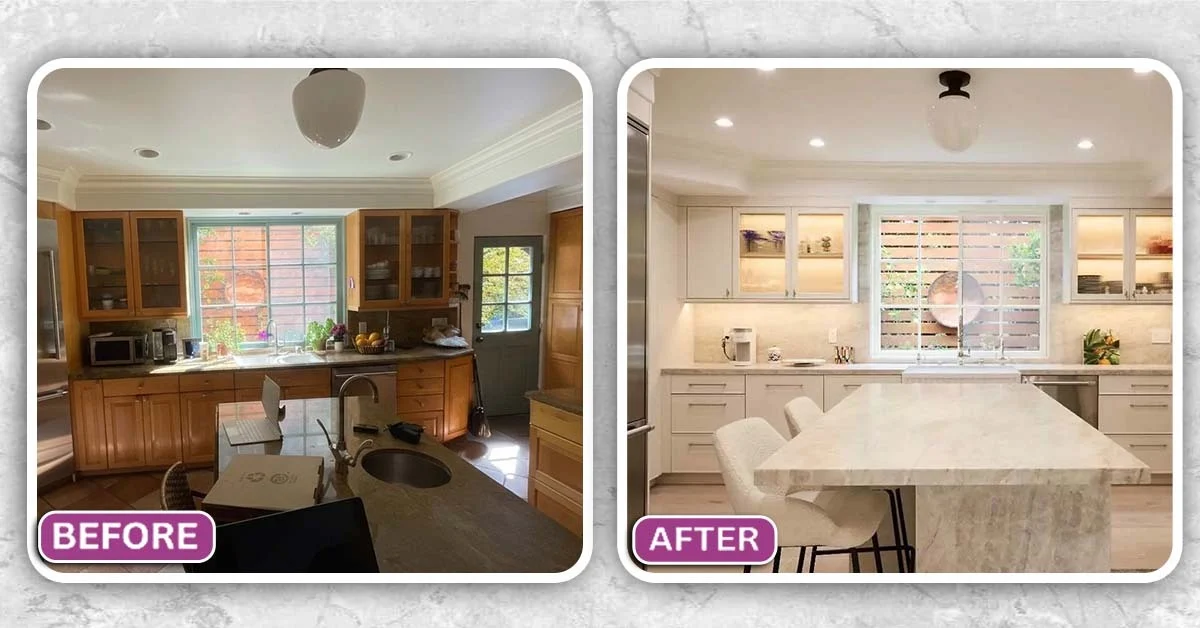
Small rooms are everywhere, especially in cities like Los Angeles, where square footage comes at a premium. But here’s what most people get wrong: they try to apply the same design logic they’d use in a bigger home, and then wonder why the space still feels cramped.
This guide breaks down exactly what those rules are, and how to apply them in every room of your home, from kitchen design ideas to bathroom design tips to the studio.
Why Small Space Design Is Harder Than It Looks
Walk into almost any small room, and you’ll spot the same mistakes. The sofa is pushed against the wall. A large bookcase is blocking the only window. The rug is so small it looks like it wandered in from another room entirely.
The space feels tight, cluttered, and somehow wrong, even when every individual piece in it is perfectly nice.
Here’s what nobody tells you: small space design isn’t just regular design scaled down. It has its own logic. Its own priorities. And most of those priorities directly contradict what you’d instinctively do.
Master them, and a 400 square foot apartment can feel like a considered, generous home. Ignore them, and even a reasonably sized room will feel like it’s quietly closing in on you.
These are the ten principles that actually work.
1. Embrace Vertical Space: Your Walls Are Wasted Real Estate
When floor space is limited, the answer is almost always the same: go up.
Vertical space is the most underused resource in small rooms. Most people ignore everything above shoulder height, which means they’re leaving the top third of every wall and the zone just below the ceiling completely unused.
Tapping into this space changes the proportions of a room in a way that almost nothing else can match.
What to do:
- Install floor-to-ceiling shelving instead of low bookcases; it pulls the eye upward and makes ceilings feel dramatically taller
- Hang curtains as close to the ceiling as possible, even if your windows sit lower; this single trick makes any room feel instantly more spacious
- Use wall-mounted lighting instead of floor lamps, which frees up floor space and keeps sightlines clean
- Mounting cabinets high in kitchens and bedrooms, you gain significant storage without using a single extra square foot of floor space.
The mistake to avoid: Stopping shelving at shoulder height. In a small room, every inch between your shelves and the ceiling is wasted potential. Don’t leave it empty.
2. Choose Furniture That Does More Than One Job
In a small space, every piece of furniture needs to earn its place, ideally by doing at least two things well.
The purely decorative side table, the single-purpose bench, the chest of drawers that mostly holds things you forgot you owned, none of these can justify their footprint when square footage is tight.
Multi-functional furniture that genuinely works:
- Ottoman with hidden storage: replaces a coffee table and stores throws, books, and remote controls out of sight
- Wall beds (Murphy beds): transform a bedroom into a full living space during the day; quality ones look like built-in cabinetry when closed
- Extendable dining tables: seats two on a Tuesday, eight on a Sunday, takes up minimal space in between
- Beds with built-in drawer storage: eliminates the need for a separate chest of drawers entirely
- Nesting tables: one footprint when not in use, three usable surfaces when you need them
- Fold-down wall desks: fold flat and disappear completely when work is done
A large sofa in a small room will always feel oversized, no matter how well it’s styled around it. Choose furniture with slim profiles and raised legs, light passing underneath a piece makes the floor feel larger, and the whole room feel airier.
3. Use Colour Strategically: Light, Dark, and Everything In Between
“Paint it white” is the universal advice for small rooms. It’s not wrong, but it’s also not the whole picture.
Light and neutral tones work because they reflect light and visually push walls outward. Soft whites, warm creams, pale greys, sage greens, these are reliable, low-risk choices, especially in rooms that don’t get much natural light.
But dark colours can work too, and often beautifully. Navy, forest green, charcoal, deep terracotta: when used consistently across walls, trim, ceiling, and woodwork (a technique called “colour drenching”), dark tones stop creating visual boundaries. The room stops feeling like a box and starts feeling like an intentional, enveloping space. Intimate rather than cramped.
The rule that matters most: Consistency. Visual chaos, too many competing colours, too many contrasting patterns, is what makes small rooms feel genuinely small. A palette that flows calmly and consistently from one surface to the next reads as spacious, regardless of actual square footage.
Pick a direction. Commit to it. Everything else follows.
4. Maximise Natural Light: and Manufacture It When You Can’t
Light is the single most powerful space-expanding tool available. And unlike furniture or a fresh coat of paint, optimising it often costs very little.
- Strip back window treatments. Heavy curtains block the one thing small rooms need most. Choose sheer linen panels, slim roman blinds, or nothing at all where privacy allows
- Place a large mirror opposite the windows. This doubles the apparent light in a room, the oldest interior design trick in the book, and it still works every single time
- Use reflective surfaces throughout, glass tabletops, mirrored cabinet fronts, and large-format glossy tiles to keep light bouncing around the room rather than being absorbed by it
- Layer your lighting. A single overhead bulb creates a flat, institutional feel. Combine ambient (general), task (functional), and accent (decorative) lighting to add depth and dimension
- In low-light rooms, full-spectrum bulbs that mimic daylight make a noticeable difference. The colour temperature of artificial light affects how spacious a room feels more than most people realise
5. Declutter First: Design Second
No design decision, not the right paint colour, not the perfect sofa, not the most precisely placed mirror, can overcome chronic clutter. It simply cannot be done.
Before any design work begins, edit your belongings. The goal isn’t minimalism for minimalism’s sake; it’s intentionality. Every object in a small room should be either genuinely useful or genuinely beautiful. Ideally both. If it’s neither, it doesn’t belong there.
Storage strategies that actually help:
- Built-in storage uses awkward corners, alcoves, and recesses that off-the-shelf furniture can never reach; it’s almost always more efficient than freestanding alternatives
- Under-bed storage: beds with integrated drawers or frames raised high enough for storage containers can absorb off-season clothing and bulky bedding
- Hidden storage furniture everywhere: benches with lids, ottomans with interiors, bedside tables with drawers
- Hallway shelving: even the narrowest corridor can take a tall, slim unit that functions simultaneously as a library, display space, and practical storage
The right storage system doesn’t just hide clutter. It removes the conditions that allow clutter to build up in the first place. If you’re working with a Los Angeles home and want a solution that fits your exact space, the closet and storage design work at Karamia Designs is worth exploring. They build bespoke storage that uses every corner a standard unit would waste.
6. Use Rugs to Define Zones in Open-Plan Spaces
In a studio apartment or open-plan living area, the temptation is to treat the whole thing as one big room. That’s the mistake. The goal is to make it read as several smaller, distinct ones.
Zoning is the technique. Rugs are the primary tool.
A rug under the sofa and coffee table says: This is the living room. A different rug under the dining table says: This is the dining room. The floor between them becomes an implicit corridor. Done well, a single open-plan space reads as three distinct areas, without a single wall.
The rules that matter:
- Go larger than you think you need. A rug that only reaches the front legs of the sofa looks like a mistake. All key furniture pieces should sit fully on the rug, or at a minimum, have their front legs on it
- Keep patterns simple. Busy patterns add visual noise. In a small space, noise is the enemy
- If you layer rugs, do it deliberately, for texture and visual interest, not accidentally
7. Rethink the Layout: Most Small Rooms Are Arranged Wrong
Of everything on this list, layout has the greatest impact on how spacious a room feels. And most small rooms are arranged in ways that actively work against them.
The most common layout mistakes:
Pushing all furniture against the walls: This is the instinct: clear the centre, open things up. In practice, it creates a strange hollow centre and makes rooms feel more awkward, not less. Floating furniture slightly away from walls creates a more cohesive, settled look.
Blocking windows with furniture: Never place a large bookcase, wardrobe, or storage unit in front of a window. You’re sacrificing your most valuable design asset for marginal storage.
Ignoring traffic flow: Every room needs clear pathways. A minimum of 36 inches for primary routes is the standard. If navigating the room requires turning sideways, something needs to move.
Simply having too much furniture. If you can’t walk comfortably around every piece, you have too many pieces. Editing the layout usually means editing the contents first.
8. Small Kitchen Design: Making Every Inch Count
The kitchen is the most demanding small space in any home. It has to be functional, safe, and genuinely pleasant, all within a footprint that can be genuinely tiny.
High-impact ideas:
- Open shelving instead of upper cabinets removes visual weight from the top half of the kitchen; suddenly, the room breathes. Style the shelves intentionally, not as a catch-all
- Light-coloured cabinetry, white, cream, pale grey, reflects light and reads as significantly larger
- Handle-less, push-to-open cabinets eliminate hardware and create a dramatically cleaner visual
- A kitchen island on wheels delivers extra prep surface and storage when needed and disappears completely when it doesn’t
- Integrated appliances, a fridge or dishwasher finished with a matching cabinet door, stop reading as an appliance and become part of the room
- Mirrored splashbacks reflect the kitchen on itself and effectively double the apparent depth of the space
If you’re in Los Angeles and your kitchen is genuinely holding your home back, it’s worth seeing what a professional eye can do. Karamia Designs has a kitchen design portfolio worth browsing. Their work across LA shows what’s possible in compact kitchens when you apply these principles with precision.
9. Small Bathroom Design: Making It Feel Expensive
A well-designed small bathroom doesn’t feel small. It feels curated, considered, and surprisingly generous. The difference is entirely in the details.
- Large-format tiles: fewer grout lines mean less visual fragmentation, which the eye reads as more space
- Wall-hung vanities and toilets: lifting fixtures off the floor is one of the most effective space-expanding moves available
- A walk-in shower instead of a bathtub in bathrooms where the tub is rarely used: the floor space and visual openness gained is almost always worth it
- Frameless glass shower screens: a framed screen divides the room in two; frameless glass is nearly invisible
- Recessed shower niches instead of hanging caddies: built flush into the wall, they add storage without adding visual clutter
- A backlit mirror handles grooming light and functions as a design feature simultaneously
For a real-world sense of what’s achievable in a compact bathroom, the bathroom design portfolio at Karamia Designs shows how dramatically a small space can shift with the right choices.
10. Studio and ADU Design: Making One Room Do Everything
A studio apartment, a compact backyard unit, a garage conversion, a granny flat, these are the most demanding small space design challenges. Everything has to happen in one place: sleeping, living, working, eating, sometimes cooking.
The solution is never to fight the limitations. It’s to design deliberately around them.
Zone everything: not with walls, but with rugs, changes in lighting, furniture orientation, and ceiling treatments. A bed facing away from the sofa creates two psychological rooms without any physical division.
Go vertical on every wall: when floor space is at its most limited, walls and ceiling become the primary canvas for both storage and design.
Invest in multi-functional furniture: in a single-room home, a piece that does two jobs is worth twice as much as a piece that does one.
Prioritise natural light above almost everything else: in a compact space, a well-lit room always feels larger than a dim one, regardless of actual square footage.
Let built-ins do the heavy lifting: custom storage fitted precisely to your specific walls and corners will always outperform freestanding furniture in both efficiency and visual calm.
The best compact homes, whether studios or fully converted garages, don’t feel like compromises. They feel intentional. If you’re in Los Angeles and considering converting a garage or building out an ADU, it’s worth understanding what that process actually involves. Karamia Designs offers ADU garage conversion services tailored specifically to LA homes, and the results speak for themselves in their ADU portfolio.
10 Small Space Upgrades You Can Do This Weekend
No budget for a full redesign? These ten changes cost very little and make a visible difference almost immediately:
- Hang your curtains at ceiling height, not window height
- Swap a bulky coffee table for a round glass one
- Place a large mirror on the smallest wall in the room
- Remove the one piece of furniture in each room that you use least
- Replace floor lamps in tight hallways with wall-mounted or recessed lighting
- Add under-bed storage containers and raise your bed frame slightly
- Paint your ceiling the same colour as your walls. Try it in one room first
- Mount a fold-down desk in a bedroom corner
- Replace solid cabinet doors in the kitchen with glass-fronted ones
- Clear your surfaces, commit to no more than three visible objects on any surface
Frequently Asked Questions About Small Space Design
Q: What is the single most important thing to get right in small space design?
Focus on layout first, then light. Everything else comes after; nothing fixes a poorly arranged or dark space.
Q: Do I have to paint small rooms white?
Light colours help, but aren’t the only option. Deep, consistent tones, especially with colour drenching, can make a small room feel more cohesive and intentional, not cramped.
Q: What furniture should I avoid in a small room?
Avoid bulky, floor-heavy furniture like oversized sectionals or solid units. If it makes the room feel heavy, it’s working against you.
Q: How do I make a studio apartment feel like a home rather than just a room?
Zone your space with rugs, lighting, or furniture direction. A clear purpose for each area makes the room feel organized, not overcrowded.
Q: Where should I start if I’m completely overwhelmed by a small space?
Start by removing, not adding. Take out the three least useful items for a week, and you’ll quickly see what the space really needs.
Q: Is it worth hiring an interior designer for a small space?
In small spaces, even small mistakes have a big impact. Karamia Designs helps turn limited space into something open and functional.
The Bottom Line
Small spaces aren’t a problem to solve. They’re a design challenge to meet with intention.
The principles in this guide work because they’re grounded in how people actually experience space, how light affects mood, how scale affects proportion, and how clutter crowds out calm. Apply even three or four of them, and you’ll notice a shift.
Apply all ten, and your small room won’t just look bigger. It’ll feel like a home.