

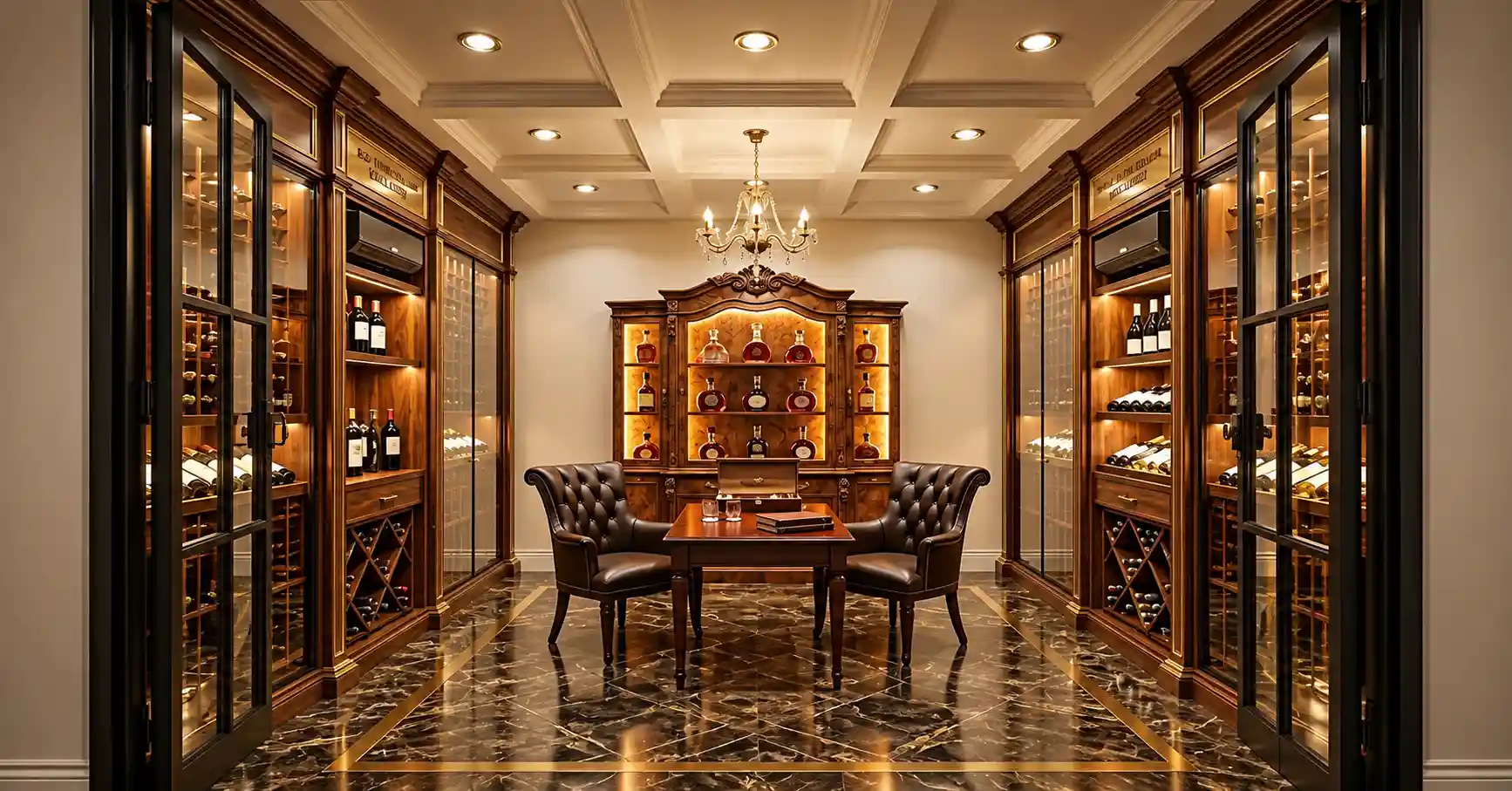
Luxury Home Wine Cellar Design: Layouts, Storage & Interior Ideas
A thoughtfully designed wine cellar can be much more than a place to store bottles. It can become an architectural feature, a display for a personal collection, or an intimate entertaining space. In a luxury home, its design should feel connected to the surrounding interiors while accommodating the practical requirements of wine storage.
When I approach a wine cellar design, I consider how the homeowner wants to use the space, the size and character of their collection, the home’s architectural style, and the relationship between storage and display. Some homeowners prefer a quiet, temperature-controlled room dedicated to their collection. Others envision a glass-enclosed wine display near the dining room or a wine lounge where guests can gather.
I believe the strongest wine cellar interiors balance these needs rather than treating storage and aesthetics as separate decisions. The right layout, materials, lighting, and display details can make the space feel intentional and integrated with the rest of the home, reflecting the same principles used in luxury residential interior design.
In this guide, I share the design considerations I use when thinking about luxury residential wine cellars, from selecting a layout to choosing finishes and planning a comfortable wine-tasting area.
What Makes a Luxury Home Wine Cellar Design Stand Out?
A luxury wine cellar should reflect the home’s character and the collector’s preferences. Its quality is not determined by size alone. A compact wine room can feel just as considered as a large walk-in cellar when its proportions, storage, materials, and lighting work together.
When planning a wine cellar interior, I focus on four key elements.
1. Architectural Integration and Spatial Planning
I begin by considering where the wine cellar will sit within the home’s overall layout. A wine room near a dining area may create a natural connection to entertaining, while a more private location can provide a dedicated setting for a collection.
The room should feel like part of the home’s architecture rather than an isolated feature. Ceiling height, wall proportions, circulation space, door placement, and sightlines all influence how the finished interior will feel. These considerations are equally important when creating luxury home interiors that maintain a cohesive architectural character.
For example, a glass-enclosed wine room can create a visual connection with an adjacent living or dining space. A more enclosed room may suit a homeowner who prefers a private, intimate atmosphere.
2. Custom Wine Displays and Storage Features
Wine storage should be planned around the collection rather than selected only for appearance. Bottle quantity, bottle sizes, preferred organization, and future collection growth all affect the design.
I consider how bottles will be arranged, whether labels should be visible, and which parts of the collection deserve a more prominent display. Custom storage can combine individual bottle positions, display shelves, horizontal racks, and dedicated spaces for larger-format bottles.
The goal is to make the collection easy to organize while maintaining a consistent visual rhythm.
3. Premium Materials and Interior Finishes
Materials establish much of a wine cellar’s character. Natural wood can introduce warmth, while glass and metal create a more contemporary appearance. Stone surfaces, textured walls, and carefully selected flooring can add depth without making the room feel visually crowded.
I prefer selecting finishes that complement the home’s wider interior palette. A wine cellar should have its own identity, but it should still feel connected to the surrounding spaces.
4. Functional Design With Visual Appeal
A beautiful wine cellar also needs to work comfortably. Bottle access, storage capacity, circulation, lighting controls, and the placement of any tasting furniture should be considered together.
I avoid treating decorative displays as the only priority. The best result is a space where the collection is protected appropriately, the storage is practical, and the interior feels cohesive.
Popular Wine Cellar Layouts for Luxury Homes
There is no single layout that works for every residence. The available space, location, collection size, and intended use should guide the decision.
These are some of the layouts I consider when developing a residential wine cellar concept.
Walk-In Wine Cellar Layouts
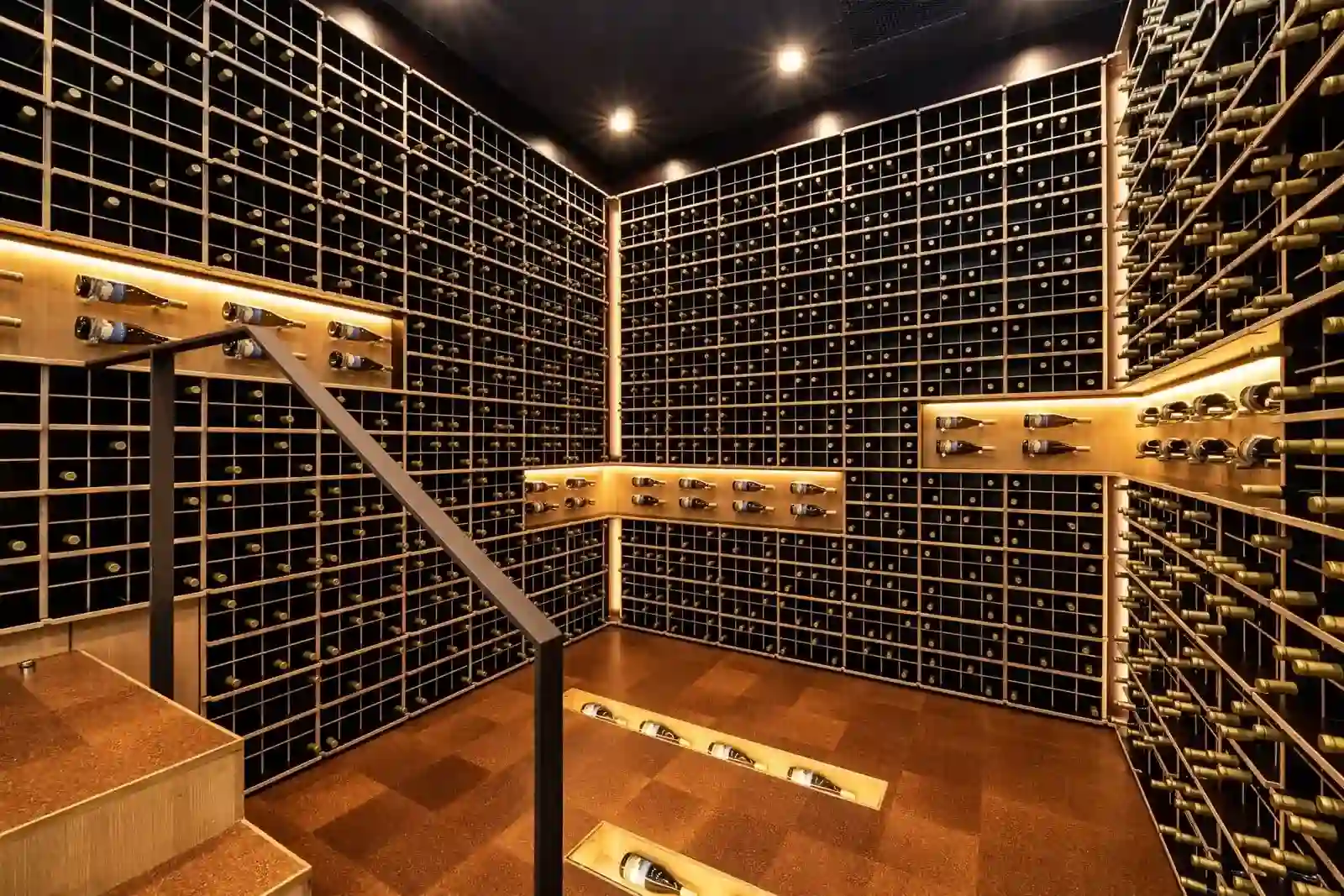
A walk-in wine cellar provides a dedicated room for storing and organizing a wine collection. It can accommodate wall-to-wall bottle storage, custom shelving, display niches, and, where space allows, a small tasting area.
For larger collections, I consider how the layout will support access to different bottle categories without making the room difficult to navigate. A central aisle can make the storage walls easier to access, while floor-to-ceiling displays can use vertical space efficiently.
A walk-in layout is particularly suitable when the homeowner wants wine storage to have a distinct place within the residence.
Glass-Enclosed Wine Cellar Designs
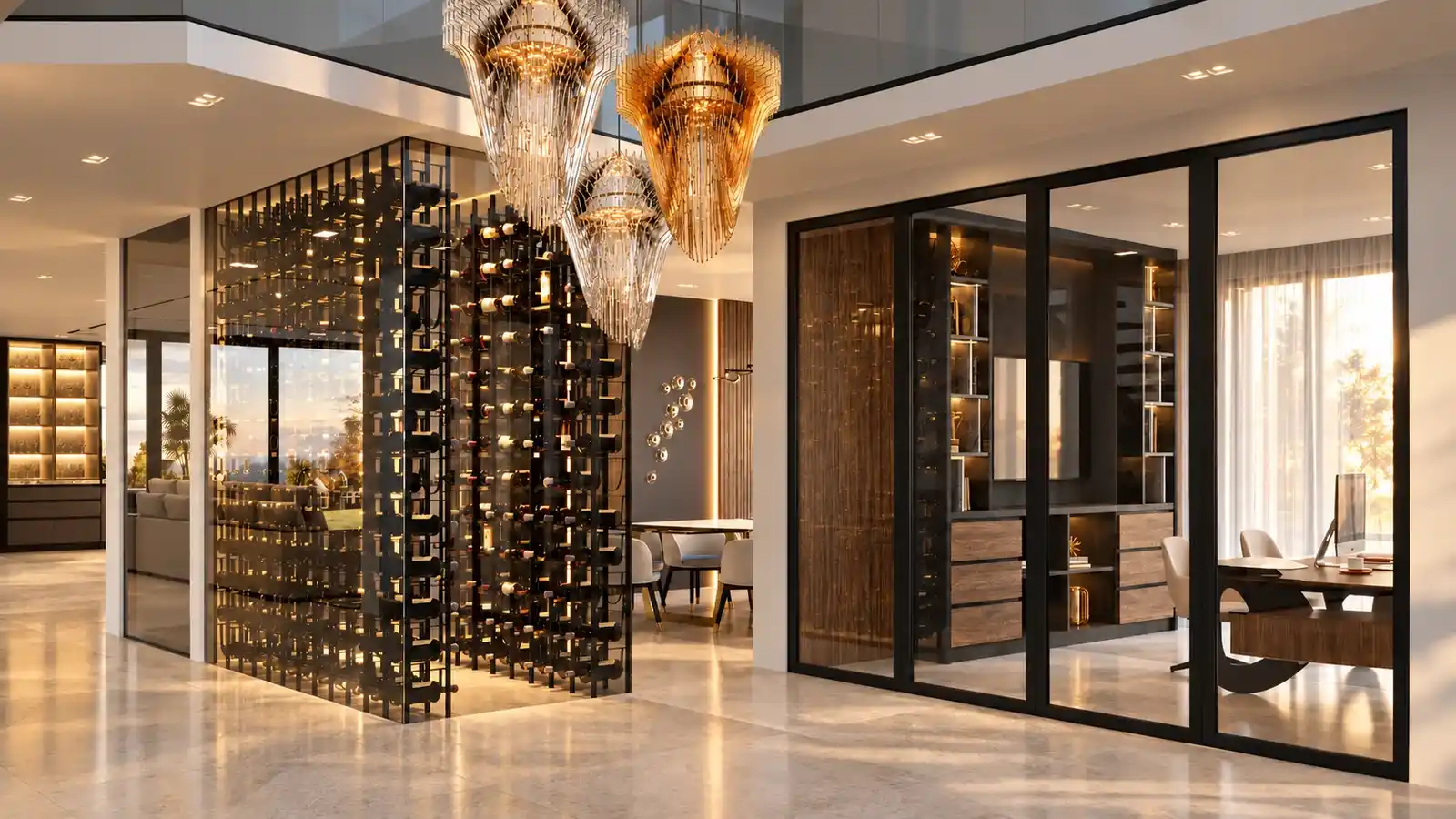
Glass-enclosed wine cellars are popular in contemporary luxury interiors because they make the collection visible from adjacent rooms.
They can be positioned near a dining room, kitchen, or entertaining area, creating a striking focal point without requiring the wine room to feel visually disconnected.
For this layout, I consider glass transparency, framing details, reflections, and how the enclosure relates to nearby finishes. The glass enclosure and door system must also be compatible with the wine room’s climate-control requirements. A wine-storage specialist should verify the appropriate specifications before the design is finalized.
Under-Stair Wine Cellar Layouts
The area beneath a staircase can offer an interesting opportunity for a compact wine display. Instead of leaving the space visually underused, it can become a carefully organized feature with custom bottle storage and integrated lighting.
The angled ceiling and available depth determine which storage solutions will work. I would first assess the usable dimensions, access, and environmental conditions before deciding how much of the collection can be accommodated.
Under-stair wine displays are especially effective when the surrounding interior is designed to make the feature feel intentional.
Wall-Mounted Wine Display Designs
A wall-mounted wine display can be suitable for homeowners who want a visible collection without dedicating an entire room to wine storage.
Individual bottle supports, metal display systems, and integrated cabinetry can create a sculptural arrangement. The design should account for bottle weight, secure mounting, accessibility, and the environmental conditions required for the intended storage.
For long-term collection storage, a decorative wall display should not automatically be treated as a substitute for a properly controlled wine cellar.
Compact Wine Cellar Layouts for Smaller Spaces
A small wine cellar can still feel luxurious when the available space is planned carefully.
I look for opportunities to use vertical storage, slim-profile racks, recessed displays, and well-organized cabinetry. Limiting unnecessary decorative elements can also help a compact room feel more open.
The key is to establish realistic storage capacity first. Trying to fit too many bottles into a small room can compromise access and make the interior feel crowded.
Custom Wine Cellar Storage Ideas and Display Solutions
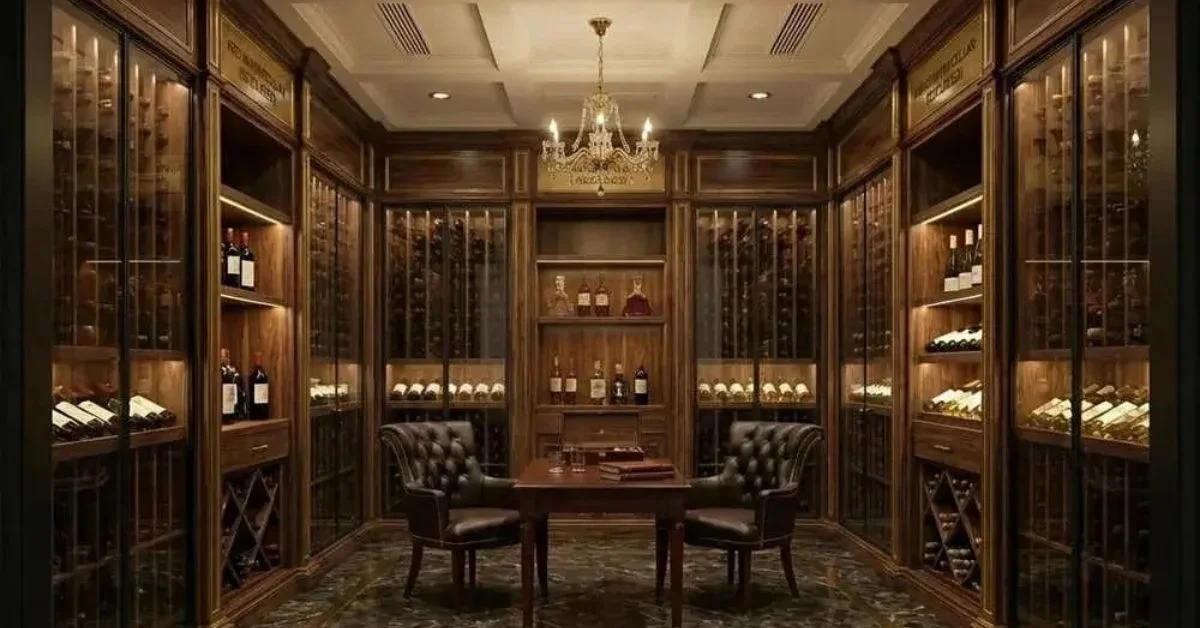
Storage is one of the most important decisions in wine cellar design because it influences both the room’s appearance and its everyday usability.
I like to think about storage in terms of three functions: organizing the collection, protecting the bottles, and presenting selected pieces in a visually appealing way.
Custom Wooden Wine Racks
Wooden wine racks bring warmth and a traditional character to a wine cellar. Depending on the home’s interior palette, they can be designed with natural, dark, or stained finishes.
Wood storage can work well in classic interiors, transitional spaces, and contemporary rooms where a warmer material is needed to balance glass or metal.
The selection should also consider the cellar’s environmental conditions. Materials and finishes need to be appropriate for the controlled environment, and the wine-storage specialist should confirm their suitability.
Metal Wine Storage Systems
Metal racks can create a clean, contemporary look. Their slim profiles can make individual bottles appear almost suspended, allowing the collection itself to become part of the room’s visual design.
Black, bronze, and other metal finishes can complement modern cabinetry, glass enclosures, and darker interior palettes.
I consider the spacing and alignment of the system carefully. Repeated bottle positions can create a strong visual pattern, while a mix of display styles can introduce variation.
Floor-to-Ceiling Wine Displays
Floor-to-ceiling storage makes use of the room’s vertical dimensions and can create a dramatic visual feature.
This approach is particularly effective in rooms with sufficient height and a clear storage plan. The design should include practical access to upper and lower bottle positions, with appropriate consideration for bottle weight and secure installation.
I also consider whether the entire wall should be dedicated to storage or whether selected sections should be reserved for display details.
Individual Bottle Display and Label Visibility
Some collectors prefer to see the labels of selected bottles rather than store every bottle in the same orientation.
A design can combine traditional horizontal storage with individual display positions for special bottles. This creates a more personalized arrangement while helping the homeowner identify parts of the collection.
The display should remain organized rather than becoming visually busy. Consistent spacing and a considered arrangement make a noticeable difference.
Combining Wine Storage With Display Cabinets
A wine cellar can include more than bottle racks. Glassware storage, serving accessories, decorative niches, and cabinetry can make the space more complete.
For a wine lounge, I may consider a dedicated cabinet for glassware and serving pieces. For a storage-focused room, I would keep these elements more limited so that the collection remains the primary feature.
Choosing Materials and Finishes for a Luxury Wine Cellar
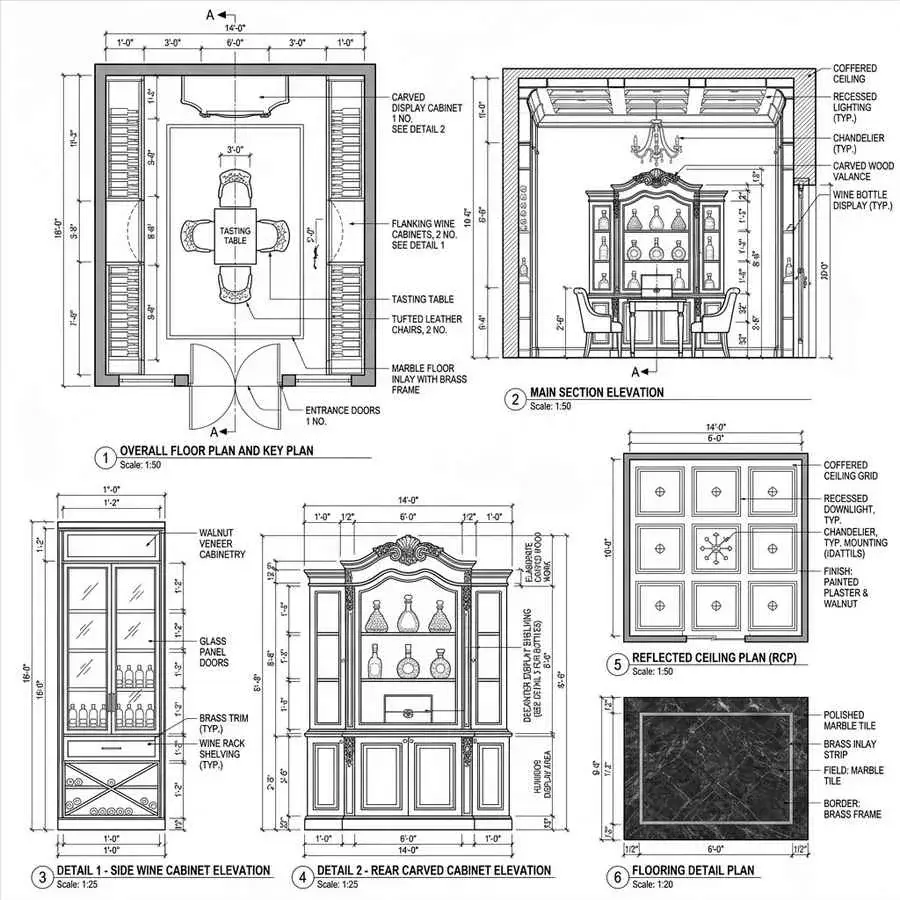
The materials in a wine cellar influence its atmosphere, visual balance, and relationship with the rest of the home. I usually begin with the home’s existing interior palette before introducing new finishes.
Natural Wood Finishes for Warm Interiors
Wood is a versatile choice for wine cellar interiors. Lighter wood tones can create a relaxed, contemporary atmosphere, while deeper finishes can make the room feel more intimate and traditional.
Wood can appear in wine racks, cabinetry, wall panels, or selected architectural details. I prefer using it with restraint so that the room feels layered rather than overly heavy.
Stone and Marble Accents
Stone and marble can introduce texture and visual contrast. They may be used on selected walls, countertops, flooring, or decorative surfaces.
A subtle stone finish can complement wooden storage, while a more expressive veining pattern can become a focal point in a contemporary wine lounge.
When selecting these surfaces, I consider how they relate to nearby materials and whether their visual character supports the atmosphere the homeowner wants.
Glass Panels and Metal Details
Glass and metal are useful for creating a more modern wine cellar aesthetic. Glass can make a compact room feel visually connected to the rest of the home, while metal framing and rack systems add definition.
The proportions of these elements matter. Too many competing metal finishes or framing details can make the interior feel busy, so I prefer a consistent material palette.
Textured Walls and Decorative Finishes
Textured plaster, subtle wall treatments, and carefully selected decorative finishes can give a wine cellar more depth.
These details are especially useful when the room has a limited amount of natural architectural variation. However, decorative surfaces should be selected with the room’s temperature and humidity conditions in mind.
Wine Cellar Lighting Design: Creating the Right Ambiance
Lighting can change the entire character of a wine cellar. It helps define the storage displays, highlights architectural details, and establishes the atmosphere of a wine lounge.
However, wine cellar lighting needs more consideration than simply choosing attractive fixtures. Light exposure, heat output, placement, and control are all important.
Integrated LED Wine Display Lighting
Integrated LED lighting can highlight individual bottles, rack systems, and display niches. It creates a clean appearance when the light source is concealed within the storage design.
I consider the direction and intensity of the light so that it highlights the collection without creating unnecessary glare.
Lighting selection should also account for heat output and the cellar’s wine-preservation requirements. A qualified wine-cellar specialist should confirm the appropriate specifications.
Recessed and Accent Lighting
Recessed lighting can provide general illumination without drawing too much attention to the fixtures themselves.
Accent lighting can be used to highlight a particular wall, material, or display feature. Combining these layers creates a more flexible lighting scheme than relying on one overhead source.
Statement Lighting for Wine Lounges
A wine lounge offers more opportunities for decorative lighting. A pendant fixture or carefully selected chandelier can establish a focal point above a tasting table or serving counter.
I consider the scale of the fixture in relation to the room. In a smaller wine lounge, a large statement piece may overwhelm the space, while a more restrained fixture can preserve visual balance.
Protecting Wine From Excessive Light Exposure
Lighting should be planned with wine preservation in mind. Prolonged exposure to direct sunlight and unsuitable artificial lighting can affect wine quality.
For this reason, I consider the placement of windows, the type of glazing, artificial light sources, and the use of lighting controls. The wine-storage professional should confirm the appropriate light conditions for the collection.
Designing a Luxury Wine Lounge Within Your Home
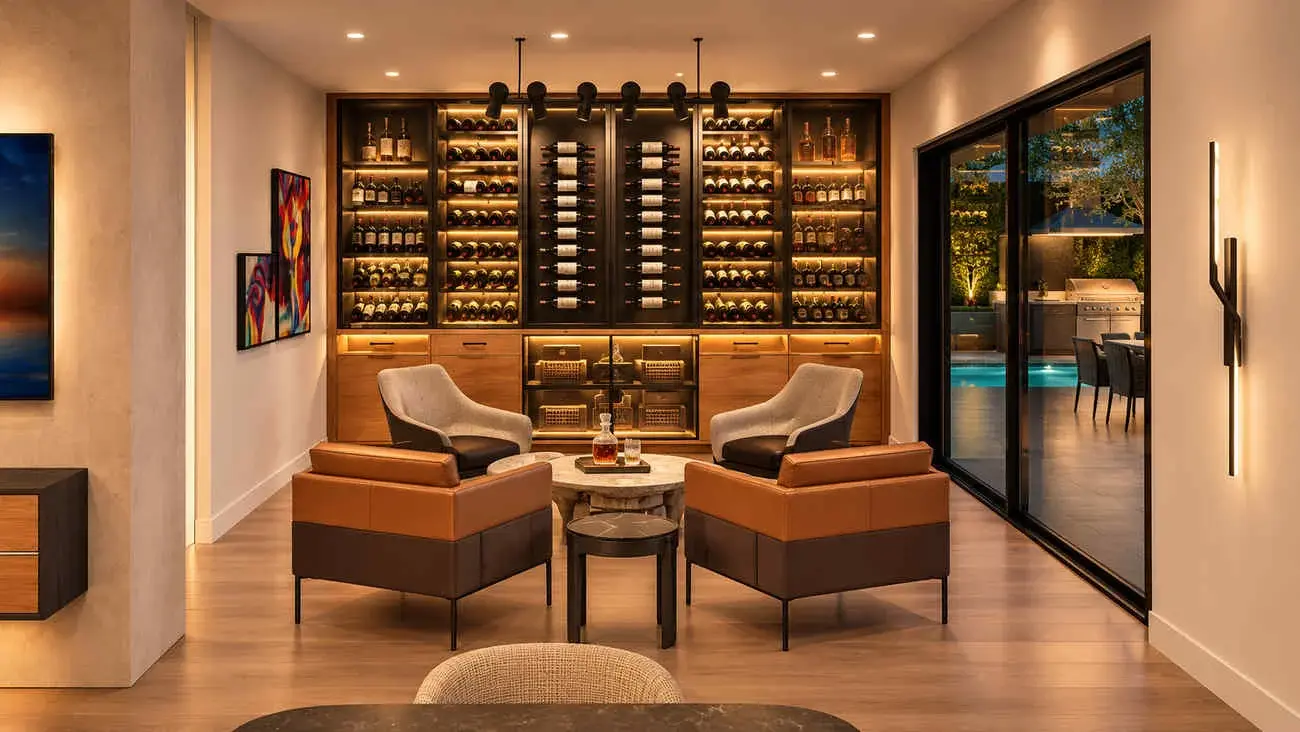
A wine cellar and a wine lounge serve related but different purposes. A cellar primarily focuses on storing and organizing the collection. A wine lounge adds a place to sit, taste, serve, and enjoy wine, much like thoughtfully planned living room spaces designed for entertaining.
Some homes benefit from combining both functions, while others are better served by keeping storage separate from the entertaining area.
Integrating Wine Storage With a Tasting Area
A tasting area can be incorporated into a larger wine room when the available floor space allows comfortable movement around the storage.
A small table, a pair of lounge chairs, or a compact counter can create a place to enjoy the collection without taking attention away from the wine displays.
I consider the number of people likely to use the space and how they will move between the seating area and the bottles.
Comfortable Seating and Lounge Arrangements
Seating should feel appropriate to the room’s intended use. A pair of comfortable chairs can create an intimate tasting area, while a larger arrangement may work in a wine lounge designed for entertaining.
The scale of the furniture is important. Oversized seating can reduce circulation space, especially in a compact wine room.
I also consider upholstery, furniture finishes, and the relationship between the seating and the room’s lighting.
Bar Counters and Serving Areas
A serving counter can make a wine lounge more functional by providing space for opening bottles, arranging glassware, and serving guests.
Depending on the layout, it may be integrated into custom cabinetry or designed as a separate feature.
Storage for glassware and serving accessories should be planned at the same time so that the counter remains uncluttered.
Connecting Wine Rooms With Dining and Entertainment Spaces
A wine room near a dining room can make entertaining feel more connected. A glass enclosure may allow the collection to become part of the wider interior composition.
In homes with dedicated entertainment areas, the wine lounge can also complement a media room or other gathering space. The important consideration is maintaining a consistent design language across connected rooms, as seen in these luxury living room interiors.
Climate Control and Practical Considerations in Wine Cellar Design
A wine cellar must be planned around the conditions required to store the collection. Attractive racks and finishes cannot compensate for an unsuitable storage environment.
This is one area where interior design decisions need to work closely with wine-storage and mechanical specialists.
Temperature and Humidity Management
Wine storage generally requires a stable environment. A commonly referenced target for long-term wine storage is approximately 55°F (13°C), with relative humidity often maintained around 60–70%. However, the appropriate conditions can vary depending on the collection, storage duration, and specialist recommendations.
Consistency is important. Frequent temperature fluctuations and unsuitable humidity levels can create problems for corks, labels, and wine quality.
I recommend involving a qualified wine-cellar specialist early in the planning process so that the required environmental conditions are established before the interior finishes and storage systems are finalized.
Insulation and Vapor Barriers
A properly controlled wine cellar may require specialized insulation and vapor-management details to help maintain stable conditions.
These are technical building-envelope considerations, not simply decorative choices. The specifications should be determined by qualified professionals based on the room’s location, surrounding conditions, and cooling system.
From an interior design perspective, I coordinate the visual requirements with the technical recommendations so that the necessary systems can be accommodated without disrupting the overall design.
Appropriate Door and Enclosure Selection
Doors and glass enclosures need to be compatible with the cellar’s environmental requirements.
For example, a glass wine room may require a specially specified enclosure and door system to help maintain the intended conditions. The final selection should be verified by the wine-cellar specialist rather than based on appearance alone.
Ventilation and Cooling System Planning
Wine-cellar cooling is different from ordinary room comfort cooling. A dedicated system may be required to maintain the conditions specified for the collection.
The equipment, airflow, and system location should be coordinated with the room layout and cabinetry. A specialist should determine the appropriate equipment and technical requirements for the space.
Lighting and Heat Management
Lighting fixtures and other equipment can introduce heat into the room. I consider their location and operation as part of the overall design.
The goal is to create an attractive interior while allowing the wine-storage system to perform as intended.
How to Plan a Custom Wine Cellar for Your Home
A successful wine cellar begins with a clear understanding of the homeowner’s collection, available space, and intended use. I find it helpful to work through the following decisions before settling on a final design direction, much like the considerations involved in planning a cohesive home interior.
Step 1: Define the Purpose of the Space
Start by deciding whether the priority is long-term wine storage, collection display, entertaining, or a combination of these functions.
A storage-focused cellar will need a different layout from a wine lounge with seating and a serving counter.
Step 2: Assess the Available Space
Consider the room’s dimensions, ceiling height, access, surrounding spaces, and any architectural limitations.
A dedicated room, under-stair area, or glass-enclosed space may each offer different possibilities. The available dimensions should guide the storage capacity rather than forcing an oversized collection into an unsuitable layout.
Step 3: Understand the Wine Collection
Estimate the number of bottles you want to store and consider whether the collection is likely to grow.
Think about bottle sizes, preferred organization, special bottles, and whether you want labels visible. These details help determine the most appropriate storage configuration.
Step 4: Establish the Storage and Climate Requirements
Before selecting decorative finishes, involve a qualified wine-cellar professional to establish the required temperature, humidity, insulation, enclosure, and cooling specifications.
This step helps ensure that the interior design supports the collection rather than creating avoidable conflicts with its storage requirements.
Step 5: Select the Layout and Materials
Once the spatial and technical requirements are understood, consider the visual direction.
Decide whether the room should feel traditional, contemporary, minimalist, or more like a private lounge. Select the wine racks, cabinetry, glass, metal, stone, and wood finishes as a coordinated palette.
Step 6: Plan Lighting and Furniture
Consider general illumination, display lighting, accent lighting, and any decorative fixtures.
If the room includes a tasting area, plan seating and serving surfaces around comfortable circulation and access to the collection.
Step 7: Coordinate the Interior With the Relevant Specialists
A wine cellar involves more than interior finishes. The wine-storage system, cooling equipment, enclosure, electrical requirements, and other technical details need to work together.
I recommend coordinating the interior design with the relevant wine-cellar, mechanical, and other qualified professionals before final selections are made.
Wine Cellar Design Ideas Inspired by Luxury Residential Interiors
The most interesting wine cellar interiors are often those that respond to the character of the residence rather than following a single design trend.
When reviewing wine cellar inspiration, I recommend looking beyond the racks themselves. Pay attention to the relationship between storage and architecture, the use of glass, the balance of materials, and how lighting changes the atmosphere.
A few design directions worth considering include:
- Contemporary glass wine rooms: Clear enclosures, streamlined metal details, and integrated displays create a strong visual connection with surrounding interiors.
- Warm wood wine cellars: Natural wood tones and carefully arranged bottle storage create a more traditional and inviting atmosphere.
- Minimalist wine displays: Restrained finishes, clean lines, and consistent bottle arrangements allow the collection to become the main visual feature.
- Private wine lounges: Comfortable seating, a serving counter, and layered lighting create a more social setting.
- Architectural wine features: Under-stair displays, recessed niches, and custom wall arrangements use the home’s existing architectural features as part of the design.
When I develop a wine cellar concept, I look for ways to make these elements feel natural within the residence. The objective is not to copy a particular reference image, but to create an interior that reflects the homeowner’s preferences and the architecture of the home.
Common Wine Cellar Design Mistakes to Avoid
Some design decisions can make a wine cellar less practical, even when the room looks impressive. I recommend considering these potential issues early.
1. Choosing the Layout Before Understanding Storage Needs
Selecting racks before estimating the collection size can lead to insufficient capacity or wasted space.
Start with the collection and its likely growth, then determine the layout.
2. Prioritizing Display Over Practical Access
A visually striking display may be difficult to use if bottles are hard to reach or the circulation space is too narrow.
Balance presentation with accessibility and organization.
3. Treating Decorative Glass as a Complete Wine-Cellar Enclosure
Not every glass partition or door is suitable for a temperature-controlled wine room.
The enclosure needs to be specified in coordination with the cooling and climate-control requirements.
4. Overlooking Lighting Exposure and Heat
Lighting should enhance the collection without introducing unnecessary heat or excessive exposure.
Consider fixture placement, light controls, and the recommendations of the wine-storage specialist.
5. Selecting Finishes Without Considering the Environment
Materials should be appropriate for the conditions inside the wine cellar.
A finish that looks beautiful in a standard living area may not be suitable for a room with different temperature and humidity requirements.
6. Adding a Lounge Without Enough Space
Seating, tables, and serving counters can make a wine room more inviting, but they also require floor space.
Plan furniture around the room’s primary purpose and maintain comfortable access to the collection.
7. Treating the Wine Cellar as a Separate Design From the Home
A wine cellar should have its own atmosphere, but its materials, proportions, and visual language should relate to the surrounding interiors.
A cohesive design makes the room feel like a natural part of the residence.
Frequently Asked Questions About Luxury Home Wine Cellar Design
- Can a wine cellar be designed without a basement?
Yes. A wine cellar can be incorporated into an interior room, under-stair area, or glass-enclosed space, provided it can support the required storage conditions.
- What is the difference between a wine wall and a wine cellar?
A wine wall is generally a display feature within an existing room, while a wine cellar is a dedicated space designed for wine storage and environmental control.
- Are glass wine cellars suitable for modern homes?
Yes. Glass enclosures create an elegant display and connect visually with surrounding interiors, but they must be properly specified for temperature and humidity control.
- Can a wine cellar be part of a kitchen?
Yes. A wine display or dedicated wine room can be positioned near a kitchen, but long-term wine storage should be protected from heat-producing appliances.
- Can a wine cellar accommodate oversized bottles?
Yes. Custom storage systems can include dedicated spaces for larger-format bottles when their dimensions are considered during the design process.
Creating a Wine Cellar That Feels Like Part of Your Home
A well-designed wine cellar should reflect more than a collection of bottles. It should respond to the homeowner’s lifestyle, complement the home’s architecture, and provide an organized environment for storing and enjoying wine.
When I approach a residential wine cellar, I bring the same attention to proportion, material selection, lighting, and spatial flow that I apply to the rest of the home’s interiors. Whether the concept is a compact wine display, a glass-enclosed cellar, or a private wine lounge, every decision should contribute to a cohesive result.
I’m Karina Rizzo, Founder and Principal Interior Designer at Karamia Designs. My approach to luxury residential interiors is centered on creating spaces that feel considered, personal, and connected to the way people live. If you are considering a wine cellar for your home, I would be happy to discuss the space, your collection, and the interior design direction you have in mind.